
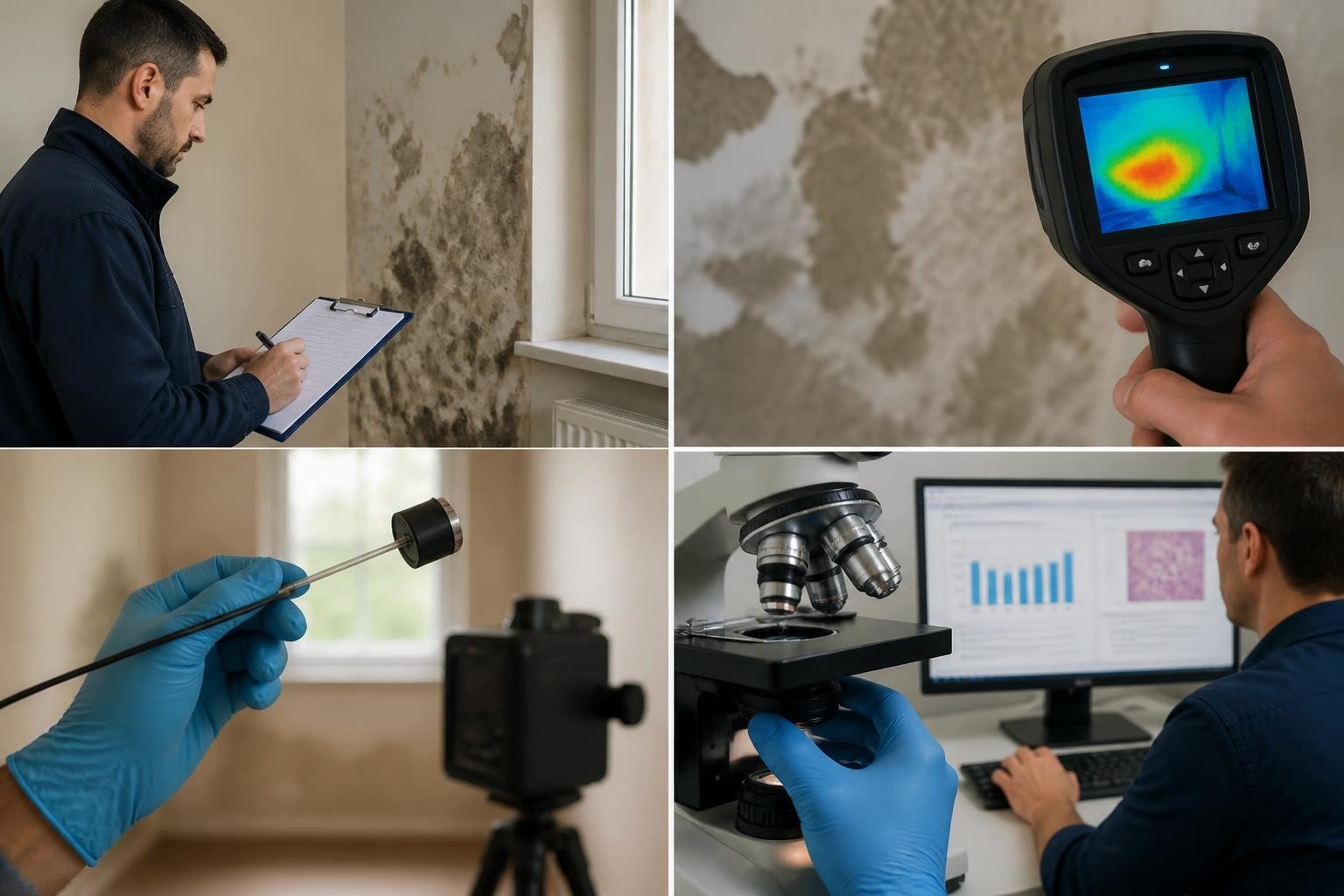
Mould growth in UK properties has emerged as one of the most pressing compliance and health concerns for duty holders in 2026. Whether managing residential blocks, commercial portfolios, or mixed-use developments, understanding when and how to commission mould surveys has become essential. The tragic case of Awaab Ishak and subsequent legislative response through the Social Housing (Regulation) Act 2023 has elevated mould from a maintenance issue to a statutory priority. This guide explains everything property professionals need to know about mould surveys, from regulatory triggers to selecting the right assessment methodology.
Understanding Mould Surveys and Their Purpose
A mould survey is a structured investigation designed to identify the presence, extent, and underlying causes of fungal contamination within a building. Unlike superficial inspections, professional mould surveys combine visual assessment, environmental monitoring, and laboratory analysis to deliver evidence-based findings.
The primary objectives include establishing the scope of contamination, identifying moisture sources, assessing health risks to occupants, and providing actionable remediation strategies. Modern mould surveys also evaluate building fabric failures, ventilation inadequacies, and occupant behaviour patterns that contribute to persistent dampness.
When Mould Surveys Become Mandatory
Property duty holders face clear triggers that mandate formal assessment:
- Tenant complaints of visible mould or musty odours
- Repeated condensation issues despite heating upgrades
- Water ingress events requiring post-incident verification
- Pre-acquisition due diligence for commercial transactions
- Regulatory enforcement notices from local authorities
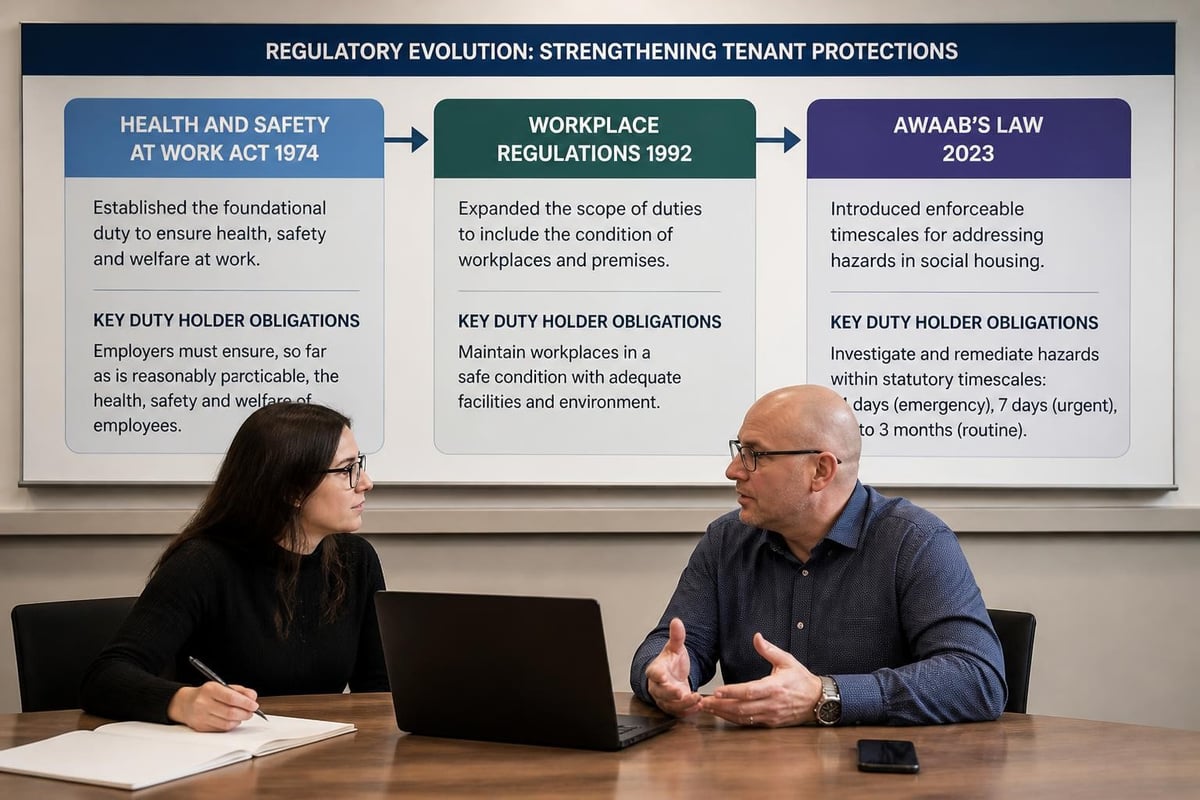
- Workplace health concerns raised under HSWA 1974
The World Health Organization guidelines emphasise that exposure to damp and mould increases the risk of respiratory infections, allergies, and asthma. This evidence base underpins the legal duty to act promptly when contamination is suspected.
Types of Mould Surveys and Assessment Methodologies
Selecting the appropriate survey methodology depends on property type, contamination severity, and compliance objectives. Different scenarios demand different approaches.
Visual Inspection Surveys
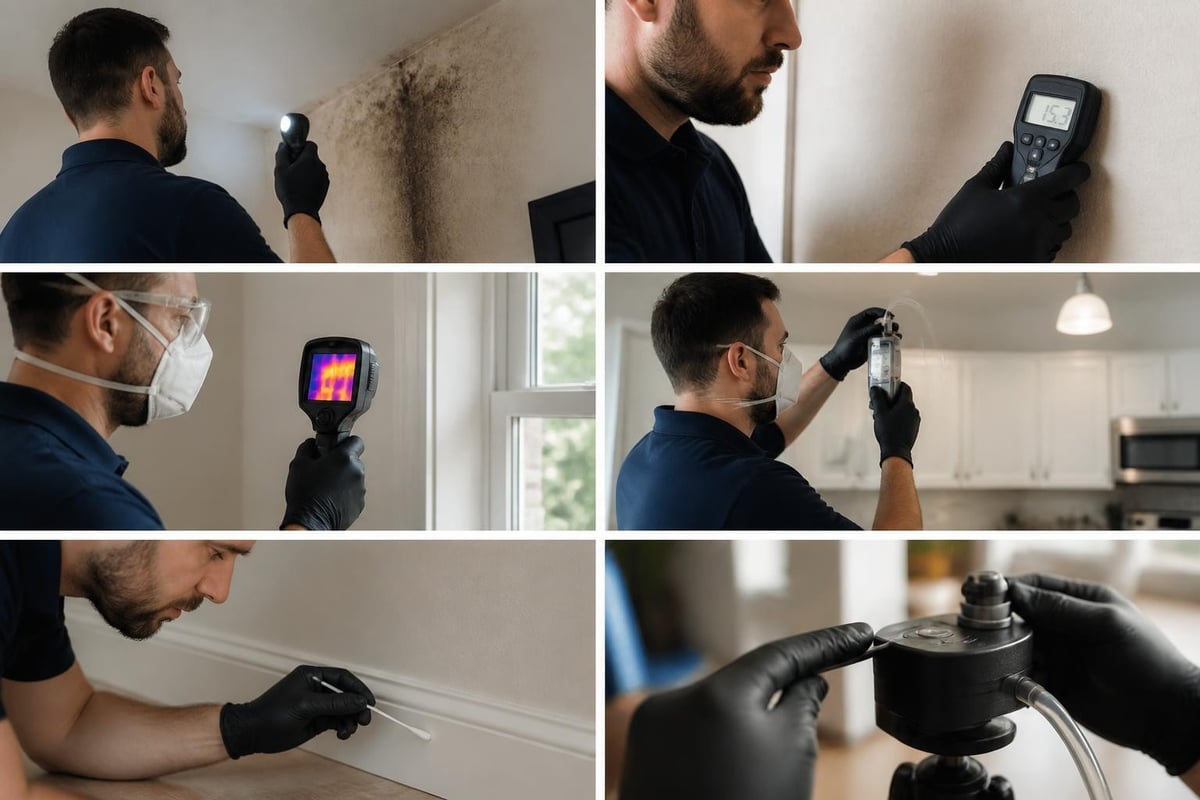
Entry-level assessments focus on observable mould growth, moisture patterns, and building defects. Surveyors use thermal imaging cameras to detect hidden dampness, moisture meters to quantify substrate saturation, and hygrometers to measure relative humidity levels.
These surveys suit low-risk scenarios where surface mould is limited and causes appear straightforward. Documentation includes photographic records, location plans, and preliminary remediation recommendations. However, visual surveys cannot confirm species identification or quantify airborne spore concentrations.
Comprehensive Mould Assessment Surveys
Full-scope investigations incorporate laboratory analysis alongside physical inspection. Air sampling captures spore counts in affected and control areas, whilst surface sampling identifies specific species and assesses viability.
Key components include:
- Detailed moisture mapping across all building elements
- HVAC system inspection and air flow analysis
- Material sampling for laboratory culture and microscopy
- Occupant health questionnaire data collection
- Building fabric thermal performance assessment
- Ventilation adequacy calculations per Building Regulations Part F
According to detailed assessment processes, comprehensive surveys typically require 4-8 hours on-site depending on property size, followed by laboratory analysis over 7-14 days.
| Survey Type | Site Duration | Laboratory Work | Typical Cost Range | Best For |
|---|---|---|---|---|
| Visual Inspection | 1-2 hours | None | £200-£500 | Minor surface mould, initial screening |
| Standard Assessment | 2-4 hours | Air/surface sampling | £600-£1,200 | Moderate contamination, compliance verification |
| Comprehensive Survey | 4-8 hours | Multi-point sampling + analysis | £1,500-£3,500 | Extensive mould, hidden contamination, legal cases |
| Post-Remediation Verification | 1-2 hours | Clearance air testing | £400-£800 | Confirming successful remediation |
Post-Remediation Verification Testing
Following mould removal works, clearance surveys confirm that spore levels have returned to background concentrations. These assessments use the same air sampling protocols as initial surveys but focus on demonstrating successful remediation rather than diagnosis.
Verification reports provide essential audit evidence that statutory obligations have been met and that properties can be safely reoccupied.
The Mould Survey Process: What to Expect
Professional mould surveys follow a structured methodology that ensures consistency and defensibility. Understanding each stage helps property managers prepare adequately and interpret findings correctly.
Pre-Survey Preparation and Documentation Review
Competent surveyors begin by reviewing building plans, previous maintenance records, and any existing dampness reports. Historical context reveals patterns, such as recurring issues in specific zones or seasonal variations in condensation complaints.
Duty holders should provide:
- Access arrangements including keys and alarm codes
- Tenant contact details for occupied units
- Previous survey reports (asbestos, building surveys, energy assessments)
- Records of ventilation system servicing
- Details of recent building works or alterations
- Complaint logs relating to dampness or mould
This preparation phase ensures that site time is maximised and that surveyors arrive equipped with appropriate sampling equipment.
On-Site Investigation Techniques
The physical survey typically progresses through multiple assessment layers. Surveyors systematically examine all accessible areas, paying particular attention to risk zones such as external walls, window reveals, bathroom ceilings, and poorly ventilated cupboards.
Moisture detection methods include:
- Capacitance meters for surface moisture content
- Pin-type meters for depth penetration readings
- Thermal imaging to identify cold bridging and insulation failures
- Relative humidity monitoring in enclosed spaces
Air sampling uses calibrated pumps to draw known volumes through collection cassettes. Sampling locations are selected to capture contaminated areas whilst control samples establish baseline spore levels in unaffected zones. Surface samples involve sterile swabs or tape lifts from visible growth areas.
Laboratory Analysis and Reporting
Samples proceed to UKAS-accredited laboratories for microscopic examination and culture analysis. Results identify mould species (commonly Aspergillus, Penicillium, Stachybotrys, and Cladosporium), quantify spore concentrations, and assess viability.
The survey report synthesises findings into prioritised remediation actions. It should clearly distinguish between:
- Immediate risks requiring urgent intervention within days
- Significant defects needing resolution within weeks
- Preventative measures to address within maintenance cycles
Reports for residential landlords must align with statutory response timescales under Awaab's Law: 14 calendar days for emergency hazards, one month for serious issues.
Common Mould Causes Identified During Surveys
Understanding root causes separates effective remediation from temporary cosmetic treatment. Mould surveys systematically investigate the moisture sources that enable fungal colonisation.
Building Fabric Failures
Water penetration through defective roofs, failed pointing, or damaged render provides the primary moisture source in many cases. Thermal imaging readily identifies these ingress points, even when internal manifestation occurs remotely from the external defect.
Cold bridging at structural junctions, inadequate insulation, and failed cavity trays create condensation surfaces where surface temperatures fall below dew point. Recent case studies demonstrate how early detection through regular monitoring prevents escalation into extensive contamination.
Mechanical Ventilation Inadequacies
Modern airtight construction requires mechanical ventilation to function correctly. Surveys frequently identify blocked extract grilles, failed fans, or incorrectly commissioned systems that leave bathrooms and kitchens under-ventilated.
Positive input ventilation (PIV) systems may be undersized for property volume or poorly positioned. Natural ventilation strategies fail when background ventilators are sealed by occupants attempting to reduce draughts.
Occupant Behaviour and Lifestyle Factors
High-density occupation, clothes drying indoors, and inadequate heating all contribute to elevated moisture production. However, as housing association surveys demonstrate, blaming occupant lifestyle becomes indefensible when building fabric or ventilation systems prove inadequate.
The duty holder's obligation remains to provide a building capable of maintaining healthy conditions under normal occupation patterns.
Health Implications and Risk Assessment
Mould surveys must evaluate health risks to occupants, particularly vulnerable groups including infants, elderly residents, and those with respiratory conditions or compromised immune systems.
Respiratory effects range from allergic reactions and asthma exacerbation to hypersensitivity pneumonitis in severe cases. Certain species produce mycotoxins, though domestic exposure levels rarely reach concentrations that cause acute toxicity.
Risk factors surveyors assess include:
- Extent of visible mould growth (measured in square metres)
- Airborne spore concentrations relative to outdoor baselines
- Species identification, particularly toxigenic types
- Proximity to sleeping or prolonged occupation areas
- Presence of vulnerable occupants
- Duration of exposure
Properly conducted mould and damp assessments translate these factors into clear risk classifications that inform remediation urgency and scope.

Selecting a Competent Surveyor
The mould survey industry remains largely unregulated, making due diligence essential when appointing surveyors. Competence markers include professional memberships (RICS, CIOB, or specialist mould associations), UKAS laboratory accreditation for analytical work, and demonstrable experience in similar property types.
Request example reports to assess clarity, technical rigour, and actionability of recommendations. Surveyors should hold professional indemnity insurance appropriate to portfolio value and carry calibrated equipment with current certification.
Avoid combining survey and remediation services under the same contract. Independence between assessment and corrective works ensures objectivity and removes commercial incentives to over-specify treatments.
| Qualification/Accreditation | Relevance | What It Demonstrates |
|---|---|---|
| RICS membership | High | Professional standards, CPD, insurance requirements |
| UKAS laboratory accreditation | Essential for sampling | Quality assurance, competence verification, audit trail |
| BOHS P400 qualification | Desirable | Specialist mould remediation knowledge |
| CSRT certification | Moderate | Damp surveying competence, rising damp expertise |
| Professional indemnity insurance (£5m+) | Essential | Financial protection against negligent advice |
Interpreting Survey Results and Prioritising Actions
Survey reports should clearly distinguish findings, interpretations, and recommendations. Raw data (moisture readings, spore counts) requires expert interpretation within building-specific context.
Spore concentration thresholds vary by species and sampling methodology. Outdoor control samples establish comparative baselines, as elevated indoor counts only indicate problematic growth when significantly exceeding external levels.
Priority Classification Systems
Adopt consistent risk prioritisation that aligns with regulatory timescales:
- Category A (Emergency): Active water ingress, extensive contamination (>3m²), vulnerable occupants at risk
- Category B (Urgent): Moderate mould (<3m²), identified moisture source, occupant health complaints
- Category C (Planned): Minor surface growth, ventilation improvements needed, preventative measures
This classification framework, when aligned with wider compliance strategies, enables portfolio-wide risk management rather than reactive property-by-property responses.
Remediation Planning Following Survey Findings
Survey reports should specify remediation methodologies appropriate to contamination extent and substrate type. Simple surface cleaning suffices for minor cosmetic mould on non-porous surfaces, whilst extensive colonisation of porous materials (plasterboard, timber) necessitates removal and replacement.
Remediation stages typically include:
- Containment establishment to prevent spore dispersal
- Source moisture elimination (repairs, ventilation upgrades)
- Physical removal of contaminated materials where necessary
- HEPA-filtered air scrubbing during works
- Antimicrobial treatment of cleaned surfaces
- Post-remediation verification testing
- Preventative measures implementation
Contractors should follow recognised protocols and hold appropriate insurance and health and safety accreditations.
Integration With Broader Property Compliance
Mould surveys rarely exist in isolation. Effective duty holders recognise interconnections with other compliance disciplines and coordinate assessments accordingly.
Water ingress may indicate broader envelope failures requiring building surveys. Ventilation inadequacies link to energy efficiency measures and Building Regulations Part F compliance. HVAC-related mould growth connects to workplace air quality testing obligations under the Workplace (Health, Safety and Welfare) Regulations 1992.
Multi-discipline consultancies offer strategic advantages through coordinated survey programmes, unified reporting systems, and consistent contractor management. This approach, detailed in guides to consolidating property compliance, reduces duplication and provides cohesive risk visibility.
Record Keeping and Audit Trail Requirements
Maintaining comprehensive mould survey records fulfils legal obligations and demonstrates proactive management. Documentation should include original survey reports, laboratory certificates, remediation specifications, contractor completion certificates, and verification test results.
Digital asset management systems enable lifecycle tracking from initial complaint through investigation, remediation, and verification. Timestamped records prove compliance with statutory response periods and defend against allegations of neglect.
For residential landlords, the Housing Ombudsman increasingly expects evidence of systematic mould management strategies, not merely reactive responses to individual cases. Commercial duty holders face similar scrutiny under health and safety enforcement.
Cost Considerations and Budgeting
Mould survey costs vary significantly based on property size, contamination extent, and sampling requirements. Simple visual inspections for small residential units start around £200, whilst comprehensive assessments of large commercial premises with extensive laboratory work may exceed £3,500.
However, survey costs represent modest investments compared to potential consequences: statutory compliance notices, civil claims from occupants experiencing health effects, void periods during remediation, and reputational damage.
Budget provisions should account for both routine surveys (triggered by complaints or planned maintenance cycles) and post-incident investigations following water damage events. Case studies from care settings illustrate how proactive surveys protect vulnerable residents whilst avoiding enforcement action.
Technological Advances in Mould Detection
Recent innovations enhance survey accuracy and efficiency. Thermal imaging cameras with higher resolution sensors detect subtle temperature variations indicating hidden moisture. Moisture meters with radio frequency technology assess dampness behind finishes without destructive investigation.
Portable spore sampling devices provide rapid indicative results, though laboratory confirmation remains necessary for definitive species identification. Building information modelling (BIM) integration allows surveyors to overlay findings onto 3D property models, enhancing visualisation for stakeholders.
Remote monitoring systems track temperature, humidity, and moisture levels continuously, enabling early intervention before visible mould develops. These technologies support predictive maintenance strategies that prevent problems rather than merely documenting them.
Seasonal Considerations and Survey Timing
Mould growth exhibits seasonal patterns linked to condensation risk. Winter months combine low external temperatures with high internal moisture production from heating and reduced ventilation. Summer investigations may underestimate problems that manifest acutely during heating seasons.
Timing surveys strategically improves accuracy:
- Winter assessments capture worst-case condensation conditions
- Post-summer surveys identify penetrating damp from storms
- Pre-acquisition surveys should span seasons for comprehensive evaluation
- Post-remediation verification should occur during similar conditions to original survey
Properties with mechanical ventilation require assessment under operational conditions. Surveys during void periods may miss system performance issues only evident during occupation.
Future Regulatory Developments
The regulatory landscape continues evolving. Awaab's Law currently applies to registered providers of social housing but may extend to private landlords. The Building Safety Act 2022 creates broader obligations for higher-risk buildings that encompass mould as a safety concern.
Workplace regulations increasingly emphasise indoor air quality, with mould featuring in HSE enforcement priorities. The government's Decent Homes Standard review proposes stricter criteria around dampness and mould in social housing.
Property professionals should monitor UK legislation updates and ensure survey programmes anticipate rather than merely react to regulatory changes.
Effective mould management requires structured assessment through competent surveys, evidence-based remediation, and systematic record keeping aligned with evolving statutory obligations. Whether managing social housing portfolios subject to Awaab's Law or commercial premises under workplace health and safety duties, professional mould surveys provide the foundation for defensible compliance. Oxford Environmental Compliance delivers multi-discipline risk management across damp and mould alongside asbestos, fire safety, water hygiene, and building safety with audit-ready precision nationwide.