

A low headline quote can prove costly if it covers the wrong survey scope. The asbestos survey cost for a property depends on what needs inspecting and why, so estimates can vary even when they appear to describe the same service.
Property size and layout, building age, access, condition and planned work can all shape the level of inspection required. A management survey has a different purpose from a refurbishment or demolition survey, so comparing quotes without checking their scope can leave important gaps.
This guide explains which property and project details influence a tailored quote, what information to prepare and how to compare proposals by inspection scope and deliverables, not headline price alone. You’ll also see how asbestos management, refurbishment and demolition surveys support informed property risk management. With the right details to hand, you can discuss your requirements with Oxford Environmental Consultants and establish a survey scope suited to your building and plans.
Key Takeaways
- The asbestos survey cost depends on the inspection required for your property and planned work, not simply its floor area.
- Room layout, construction details, access and available building records can all help shape a tailored survey scope.
- Management, refurbishment and demolition surveys serve different purposes, so identify the work planned before deciding which is appropriate.
- Prepare property records and details about occupied areas and access to support a more accurate quote.
- Compare proposals by the areas covered and deliverables provided, then discuss your requirements with OEC.
Table of Contents
Why asbestos survey costs vary from one UK property to another
There is no single quote that suits every property. An asbestos survey cost reflects the inspection required for the building, including its layout, the areas in scope and how safely and practically those areas can be accessed. A compact building with a straightforward layout may need a different inspection plan from a similarly sized property divided into numerous rooms, plant areas and concealed spaces.
The survey’s purpose matters as much as the building itself. A survey to assess materials that could be disturbed during normal occupation has a different scope from one needed before refurbishment or demolition. The property’s current use and planned work help determine what needs inspecting. A scope that is too narrow may leave relevant areas unassessed, while the wrong survey type may not answer the project’s needs.
Building age and construction history can also inform survey planning. Records may show previous alterations or materials, but incomplete plans can leave uncertainty about what lies behind later finishes. A general overview of Asbestos explains its varied historical uses. For a property-specific assessment, the surveyor needs to consider the building and its inspection requirements.
Why online asbestos survey estimates may not match your project
Published estimates are broad indicators, not quotations based on a review of your building. Floor area alone can be misleading: two properties with similar dimensions may differ in room count, layout, construction and the number of separate areas to inspect. Access matters too. Locked rooms, restricted plant areas, occupied spaces or areas behind fixed finishes can affect what can be inspected and how the work is planned.
Plans, previous survey reports and details of alterations help build a clearer picture, although records don’t replace an inspection. If documents are missing or the building has changed, the assumptions used when preparing a quote may be affected. An online figure cannot reliably account for all those project-specific details.
What an asbestos survey quote should help you understand
A useful proposal describes the survey type, its purpose and the property areas included. Check whether it covers the whole building or only specified rooms, floors or work areas, and whether any access conditions affect the inspection.
Look for a clear distinction between confirmed arrangements and assumptions. A proposal may rely on access being provided to particular rooms or on supplied plans accurately describing the property. If those assumptions change, the scope may need review. Clarifying them before work starts helps align the inspection with your needs and makes proposals easier to compare on equivalent terms.
Oxford Environmental Consultants provides asbestos survey services, including management surveys to help property owners and duty-holders identify and assess asbestos-containing materials. Sharing the intended use, planned work, layout, access arrangements and available records gives the discussion a sound basis for a survey scope tailored to the property.
The main factors that influence asbestos survey cost
The main cost drivers are the inspection effort and the scope needed to answer the property or project’s specific question. Room count matters, but so do the connections between spaces, construction details and whether the surveyor can access relevant areas. A tailored quotation should reflect the work proposed, rather than apply a fixed amount to every building of a particular size.
Construction history can affect what needs attention. Extensions, later alterations or changes in use may mean different parts of one property have different materials and records. A clear brief helps the surveyor account for those differences when planning the inspection, rather than relying on floor area as a measure of complexity.
How size, layout and access affect survey planning
A building arranged as a few open rooms may be more straightforward to plan than one with numerous separate rooms, corridors, service areas and outbuildings. Each distinct area needs consideration. Room use and construction details also help determine how the inspection is organised, particularly where areas have been altered or have different finishes.
Access shapes the practical scope. Restricted plant rooms, locked spaces, high-level areas or fixed equipment may affect when and how inspection can take place, and whether every area in the brief is accessible on the day. In occupied buildings, access may need to be coordinated around staff, residents, customers or operational activity. Share floor plans, access arrangements and known restrictions when requesting a proposal. Flag areas that cannot be entered so the proposed coverage is clear.
How samples and reporting affect the proposed scope
Sampling isn’t automatically identical for every survey. Whether samples are needed depends on the agreed purpose, the materials encountered and the surveyor’s findings. Where sampling and laboratory analysis are proposed, check how the quotation describes them. Does it include analysis, explain how samples will be handled, or list any work that may be scoped separately? Don’t assume a headline quote includes every stage.
Reporting is another important deliverable. A useful report should explain what was inspected, where relevant materials were identified and what management considerations follow. Clear location details and limitations help readers connect findings to the building, understand any areas not covered and use the information when planning maintenance or other work.
To help shape a well-defined proposal, gather available plans, previous asbestos reports, alteration history, intended use and access information. Then compare the survey area, sampling and analysis arrangements, reporting and assumptions side by side. These details make the asbestos survey cost easier to interpret because they show what work the quotation covers.
If you’re preparing a brief and want to discuss the property details that may affect its scope, speak with Oxford Environmental Consultants.
How survey type and project purpose change the asbestos survey quote
The survey type should follow the building’s use and the work planned. A survey for managing materials during normal occupation differs from an inspection to inform refurbishment or demolition. A quote should therefore identify not only the survey type, but also the areas and activities it is intended to cover.
This distinction matters when assessing the asbestos survey cost. A project-related survey may need to examine areas affected by proposed work, with a more intrusive inspection than one focused on materials that could be disturbed during ordinary use. The right proposal is the one that matches the task, not simply the one with the broadest label.
| Survey type | Purpose | What to look for in the proposed scope |
|---|---|---|
| Management survey | Identify and assess materials that could be disturbed during normal occupation and routine maintenance. | Which occupied areas and accessible materials are included, and how findings support ongoing management. |
| Refurbishment survey | Inform planned refurbishment work in the parts of the building affected by the project. | Whether the inspection covers the specific rooms, building elements or work zones included in the refurbishment. |
| Demolition survey | Inform planned demolition through inspection of the relevant building areas. | Whether the scope corresponds to the demolition area and the level of inspection required for that project. |
When an asbestos management survey is relevant
A management survey helps identify and assess asbestos-containing materials that may be disturbed during normal occupation or routine maintenance. Its findings can inform day-to-day decisions about the building and contribute to ongoing asbestos risk management. The agreed scope should make clear which parts of the property are included. For more detail, see asbestos survey services and the principles behind asbestos management survey guidance.
A management survey isn’t a substitute for a project-specific inspection where planned work will affect building materials. If refurbishment or demolition is being considered, the project brief needs to guide survey selection and define the relevant areas.
When refurbishment or demolition changes the survey scope
Refurbishment or demolition can involve disturbing or removing building fabric, so the survey must be planned around the work area and its purpose. Depending on the project, the inspection may need to be intrusive to assess materials that aren’t visible during a routine inspection. The precise scope depends on the proposed works and the parts of the building they affect.
Give the surveyor a clear description of the planned work, drawings or specifications where available, and the rooms or structures involved. If work covers only part of a building, define its boundaries. If the project is wider, ensure the brief reflects that extent. This helps prevent a routine management scope being mistaken for a project survey. Comparing refurbishment and demolition survey purposes can also help clarify which brief fits the work.
Oxford Environmental Consultants provides management, refurbishment and demolition surveys. Aligning the quote with the project purpose makes its coverage easier to assess and gives the resulting findings a clear role in property risk management.
How to prepare and compare asbestos survey quotes
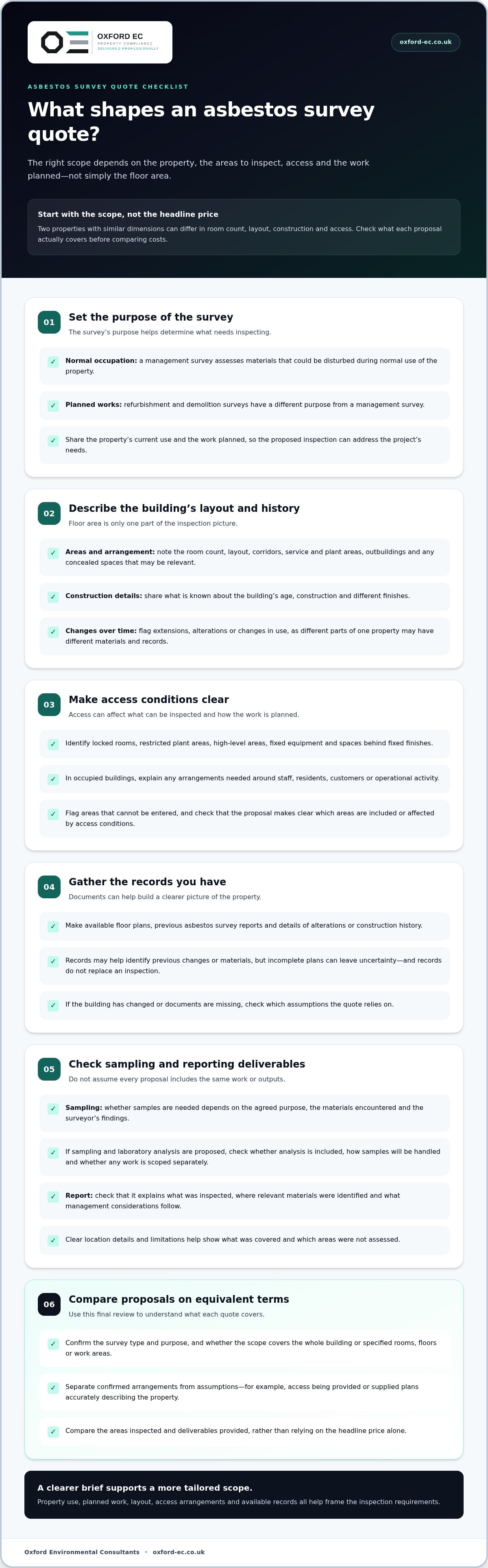
A clear brief makes it easier to receive a proposal that reflects the work your property needs. It also gives you a stronger basis for comparing quotations: align the purpose, coverage and deliverables first, then consider the quoted amount. Use these steps to prepare your request and assess the responses.
- Define the need. State whether the survey is for ongoing management, planned refurbishment or demolition, and describe the work or decision it needs to inform.
- Gather records. Collect available plans, previous asbestos survey reports and relevant building information, such as approximate age and known alterations.
- Describe access. Identify the areas to be inspected, how the building is used, any occupancy considerations and known access restrictions.
- Review the scope. Compare the areas covered, survey purpose, reporting and any assumptions or exclusions before weighing the headline quote.
What information to prepare before requesting a quote
Start with the basics: how the property is used, its approximate age and any building or asbestos records you hold. Mark the relevant rooms or work areas on a plan if one is available. Note occupied spaces, restricted areas and access arrangements, then explain whether the request relates to routine management, refurbishment or demolition. If project plans are still developing, describe the current proposal and identify what remains undecided.
These details help establish a brief that reflects the building and the intended work, rather than an incomplete description. Previous survey findings can also provide useful context. Explain whether the property has since been altered so the information can be considered appropriately.
How to compare proposals on a like-for-like basis
Set the proposals side by side and check whether they address the same survey purpose and property areas. Compare what each says about access, inspection coverage, reporting and any sampling or laboratory analysis. Review exclusions and assumptions carefully. Differences in scope can explain why quotations aren’t directly comparable, even when they appear to describe the same survey type.
Look for clarity on how a change to the project could affect the agreed work. For example, extending refurbishment into additional rooms may mean revisiting the area covered. Check that the proposed scope is described precisely, including any separately listed analysis, so you can make an informed comparison without treating an unspecified item as included.
OEC’s professional asbestos consultancy services can support property owners and duty-holders in understanding asbestos survey requirements and findings. A well-prepared brief helps frame a useful discussion about the building, planned work and the scope needed to support sound property risk management.
Ready to discuss your property details and survey requirements?
Discuss an asbestos survey cost and scope with OEC
Start by identifying why you need a survey, sharing what you know about the property, agreeing the appropriate scope and reviewing the findings against the building’s needs. This helps ensure the quotation relates to the intended inspection rather than an assumed property type or generic project.
Oxford Environmental Consultants provides asbestos management surveys to help property owners and duty-holders identify and assess asbestos-containing materials. Where planned work calls for a project-specific approach, OEC also undertakes refurbishment and demolition surveys. The purpose and boundaries of the work should be clear before an inspection is arranged.
What to include in an initial enquiry
Describe the property and its use, and explain why you’re arranging a survey. Include the approximate age if known, the areas of interest and whether the need relates to ongoing management, refurbishment or demolition. Share available floor plans, previous asbestos survey information and building records, noting any alterations that may affect how those documents reflect the property today.
Also outline access arrangements, occupied areas, known restrictions and relevant project timing requirements. These details help frame the proposed work and identify practical considerations early. If plans are still evolving, describe what is confirmed and what may change so the scope can be discussed in context.
From agreed survey scope to useful findings
Before the survey proceeds, establish which areas and purpose the agreed scope covers, along with any assumptions about access or information supplied. A defined brief focuses the inspection on the property or planned work in question. It also gives you a clear reference point when you receive the report and consider what it means for the building.
Review the findings in relation to the reason for commissioning the survey. For ongoing management, information about identified and assessed materials can support decisions about managing asbestos risks in the property. To explore how digital tools can streamline wider compliance and monitoring, discover Be-Safe Technologies Ltd. For refurbishment or demolition, consider the findings against the relevant project areas and works. If the project changes, revisit the scope rather than assuming the original inspection covered new areas or activities.
Understanding asbestos survey cost is about more than looking for a single figure. The property information you provide, the survey purpose and the agreed coverage help define what the proposed work is intended to deliver. A clear discussion of these points supports a considered decision and helps keep the inspection aligned with your requirements.
To prepare, bring together your property description, available plans or asbestos records, details of planned work, access arrangements and any timing considerations. OEC can use this information to discuss the appropriate survey type and scope. You can then review the findings against the purpose established at the outset.
Turn your survey requirements into a clear next step
A well-defined asbestos survey cost starts with a decision: what do you need the survey to help you manage or plan? Once that purpose is clear, you can move forward knowing the proposed scope relates to the building and work ahead, rather than relying on a generic estimate.
Oxford Environmental Consultants provides asbestos management surveys across the United Kingdom, alongside refurbishment and demolition surveys for project-related requirements. These services support property owners and duty-holders as needs shift from understanding materials during ongoing use to planning work that affects the building.
Before making an enquiry, bring together the property’s intended use, available records, relevant areas and any planned works. You don’t need to resolve every detail in advance. A clear starting brief can help shape a focused discussion and identify the next practical step for your property.
Discuss your asbestos survey requirements
With a tailored scope in view, you can progress with a clearer understanding of what your property needs. Take the next step with confidence.
Frequently Asked Questions
How much does an asbestos survey cost in the UK?
There’s no single UK-wide figure that applies to every asbestos survey. The asbestos survey cost depends on the survey purpose, the property and the inspection scope, so a broad online estimate may not reflect your building. A tailored quote should relate to the areas to be inspected and the work involved. To make an initial enquiry more useful, describe the property, its use and whether the survey is for ongoing management or planned work.
What information do I need to request an asbestos survey quote?
Provide the property address, its use, approximate age and the reason you need a survey. Include available floor plans, previous asbestos reports and details of alterations or planned works. Note which areas need attention, whether they’re occupied and any access restrictions, such as locked rooms or operational spaces. If the project has a defined work area, plans or a concise description can help show precisely what the survey needs to inform.
Does an asbestos survey quote include laboratory sample analysis?
Not necessarily. A quotation should state whether sampling is proposed and whether laboratory analysis is included, listed separately or excluded. Sampling needs depend on the agreed scope and what the surveyor encounters, so don’t assume every proposal covers the same number of samples or analysis arrangements. Before accepting a quote, check how any analysis is treated and how the findings will be reported, particularly if you need results to inform a specific maintenance or building decision.
Can the cost change if asbestos is found during a survey?
Finding asbestos doesn’t automatically mean the agreed survey charge changes. The scope may need review if the inspection identifies a reason for additional work, such as further sampling, or if relevant areas couldn’t be accessed as planned. Check the proposal for how variations are handled and what work is excluded. Surveying and any subsequent management or removal work are distinct activities, so don’t assume removal is part of a survey quotation.
Is an asbestos management survey different from a refurbishment survey?
Yes. A management survey helps identify and assess materials that could be disturbed during normal occupation or routine maintenance. A refurbishment survey is project-focused and considers the areas affected by planned refurbishment, which may require a more intrusive inspection. For example, a survey to inform day-to-day management may not answer questions about materials behind finishes in a proposed work area. Choose the survey according to the decision or work it needs to support.
Who is responsible for arranging an asbestos survey in a rented property?
Responsibility depends on the property’s use, who controls or maintains it and the terms of the tenancy or lease. For non-domestic premises, the duty to manage asbestos under the Control of Asbestos Regulations 2012 generally rests with the person responsible for maintenance or repair, or who has control of the premises. In a rented building, clarify these responsibilities with the landlord or managing party and review the relevant agreement before arranging work.
Do I need a new asbestos survey before refurbishment work begins?
If refurbishment could disturb building materials, a management survey may not provide the project-specific information needed for the affected areas. An asbestos refurbishment survey is intended to locate and assess materials in the work area before refurbishment proceeds. Review existing survey records against the proposed plans: if they don’t cover the relevant area or work, they may not answer the project’s needs. Define the work clearly so the survey scope can be aligned with it.