
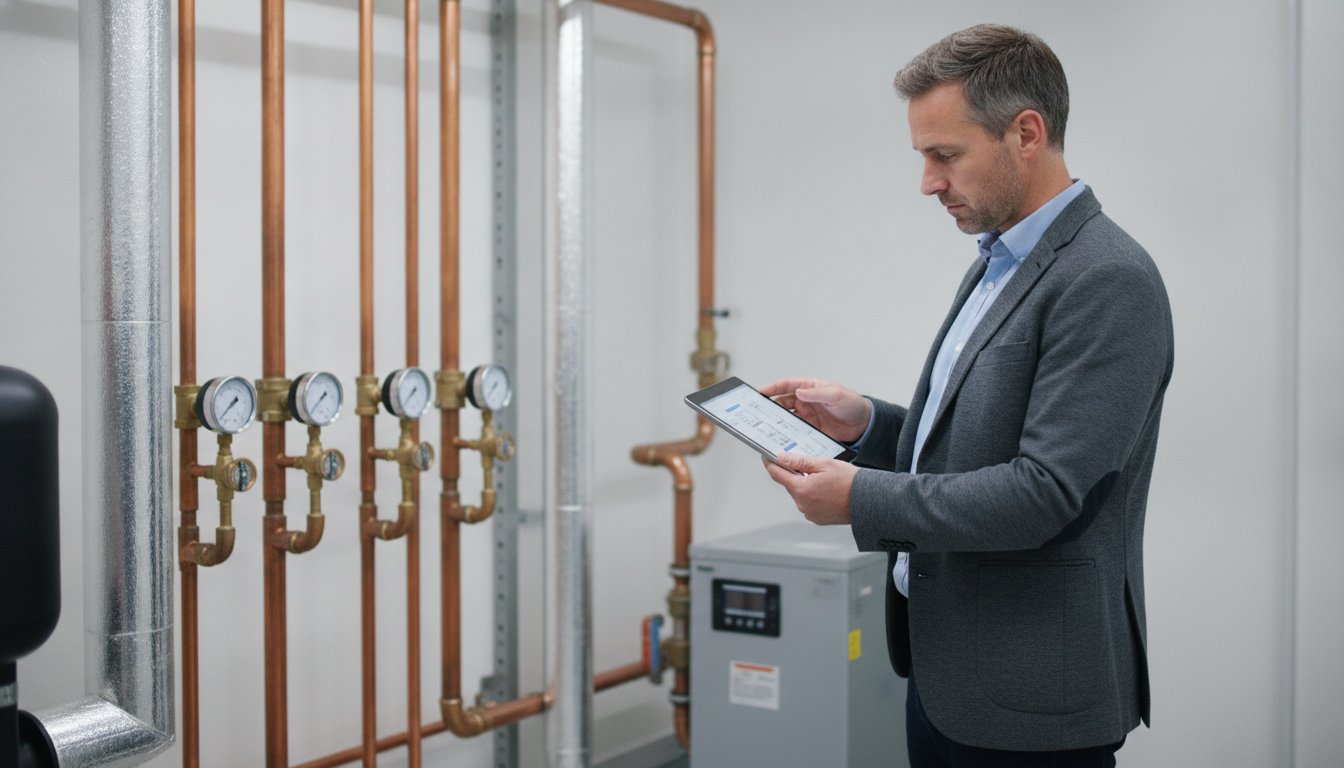
Between 2005 and 2024, UK courts issued £8.6 million in fines for Legionella-related failures. Negligence is costly. Compliance is non-negotiable. Safety is paramount. You likely recognise that conducting a valid landlord legionella risk assessment isn't a mere administrative formality but a critical statutory obligation. Whether you're managing modern developments or navigating the intricate pipework of older converted flats, the fear of prosecution for a technical oversight is a significant burden for any responsible duty-holder who values tenant health and legal security.
This comprehensive guide empowers you to master your legal obligations, providing the technical clarity needed to identify water-borne risks and guarantee absolute safety. We provide a definitive roadmap for 2026 that moves beyond simple checklists to address the sophisticated requirements of BS 8580-1:2019 and the HSE’s ACOP L8 guidance. By the end of this article, you'll understand how to distinguish between basic DIY checks and professional-grade audits, how to implement robust water sampling protocols, and how to maintain the precise, audit-ready documentation required to protect both your tenants and your professional reputation.
Key Takeaways
- Understand the statutory mandate. A documented risk assessment serves as your primary legal defence under HSWA 1974 and COSHH regulations, ensuring a robust evidence trail for duty-holders.
- Pinpoint systemic vulnerabilities. Maintaining water temperatures outside the 20°C to 45°C "danger zone" and eliminating stagnant dead legs are essential for suppressing bacterial proliferation.
- Verify assessor competence. Securing a professional landlord legionella risk assessment is critical for complex assets or high-occupancy buildings where basic DIY checks fail to meet ACOP L8 standards.
- Implement a written scheme of control. Compliance requires more than a one-off audit; landlords must establish rigorous monitoring and maintenance schedules to ensure ongoing tenant protection.
- Adopt a multi-disciplinary strategy. Integrating water hygiene with damp and mould surveys provides a comprehensive, audit-ready framework for total property compliance and risk mitigation.
Table of Contents
Landlord Legal Obligations Under UK Health and Safety Law
Compliance is mandatory. Safety is absolute. Liability is personal. Under the Health and Safety at Work etc. Act 1974 (HSWA), landlords are legally required to manage the health and safety of their tenants by preventing exposure to hazardous substances. The Control of Substances Hazardous to Health Regulations 2002 (COSHH) specifically classifies Legionella as a biological agent that must be identified, assessed, and controlled. Every landlord of a residential property is designated a "duty-holder" under these frameworks, meaning the burden of proof regarding system safety rests solely with you. Failure to conduct a landlord legionella risk assessment exposes tenants to potentially fatal respiratory infections. To understand the clinical severity of the condition, duty-holders should review what is Legionnaires' Disease? and its transmission via aerosolised water droplets. If an outbreak occurs, the property owner is held liable for any resulting illness, as the law assumes you maintain full control over the water system's integrity.
Defining the Duty-Holder and Their Responsibilities
Identification is key. Responsibility is fixed. Accountability is total. In the context of residential lets, any individual or organisation that rents out property under a lease of less than seven years is legally defined as a landlord. This definition encompasses private individuals, housing associations, and local authorities alike. Your specific duties involve ensuring that hot and cold water systems are maintained in a condition that prevents bacterial growth. This requires a "competent" risk assessment; the person conducting the audit must possess the technical knowledge to recognise system flaws like dead legs or inadequate temperature controls. Duty-holders must ensure that any risk is either eliminated or managed through a written scheme of control that is reviewed whenever the system or tenancy changes.
The Consequences of Non-Compliance and Negligence
Negligence has costs. Prosecution is public. Fines are unlimited. Statistics reveal that between 2005 and 2024, UK courts issued £8.6 million in fines for Legionella failures, proving that the Health and Safety Executive (HSE) prioritises enforcement where preventable risks are ignored. Beyond the threat of criminal prosecution, non-compliance typically voids landlord insurance policies, leaving you personally vulnerable to civil litigation and significant financial loss. UK landlords have a statutory duty of care to ensure their properties are free from health hazards that could reasonably be prevented through rigorous risk management. A professional landlord legionella risk assessment provides the documented evidence needed to demonstrate that you have fulfilled these obligations in accordance with British Standard BS 8580-1:2019, protecting your reputation and your tenants simultaneously.
Identifying Common Legionella Risks in Residential Properties
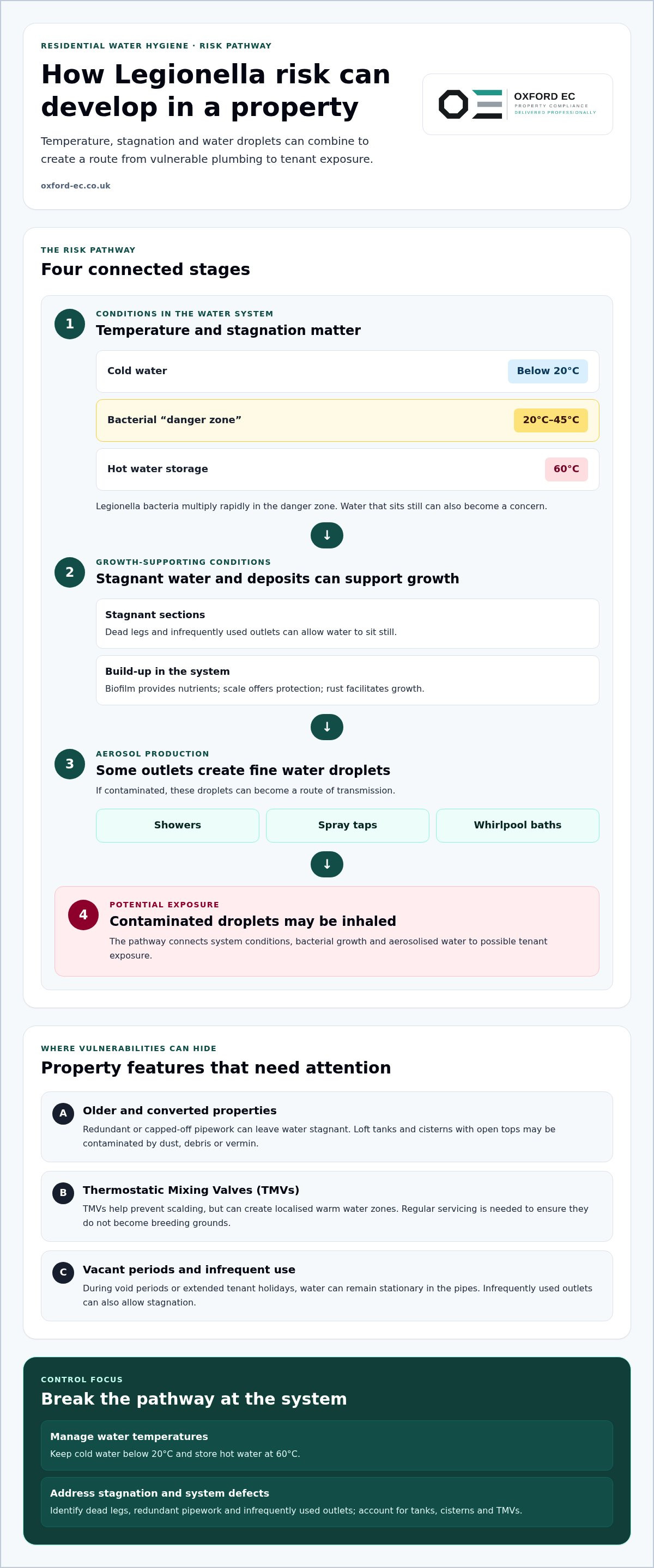
Bacterial growth is opportunistic. Environmental conditions must be controlled. Water systems are dynamic. The proliferation of Legionella pneumophila is primarily dictated by water temperature. The range between 20°C and 45°C represents the biological "danger zone" where bacteria multiply rapidly. Maintaining cold water below 20°C and ensuring hot water is stored at 60°C is fundamental to any landlord legionella risk assessment. Beyond temperature, the production of aerosols is the critical transmission vector. Showers, spray taps, and even whirlpool baths create fine mists that, if contaminated, can be inhaled by tenants. Biofilm provides the nutrients. Scale offers protection. Rust facilitates growth. In systems where water stagnates, such as dead legs created during property renovations or in infrequently used outlets, these nutrients accumulate. This creates a self-sustaining ecosystem for bacteria that is resistant to standard thermal disinfection. Understanding these Landlord Legal Obligations Under UK Health and Safety Law requires a granular inspection of every component within the water circuit.
Architectural Risks in Older and Converted Properties
Legacy systems are complex. Redundancy is dangerous. Scrutiny is essential. Converted flats often feature redundant pipework where capped-off sections allow water to sit stagnant for months, a factor that is frequently overlooked during a standard landlord legionella risk assessment. Open-topped header tanks and cisterns in loft spaces are particularly vulnerable to contamination from dust, debris, or vermin, which provide the organic matter necessary for bacterial colonies to thrive. Whilst Thermostatic Mixing Valves (TMVs) are essential for preventing scalding, they can inadvertently create localised warm water zones that require regular servicing to ensure they do not become breeding grounds. For properties with such intricate plumbing, you may wish to request a technical consultation to map these hidden vulnerabilities.
Occupancy Patterns and Vacancy Risks
Stagnation occurs quickly. Vacancy periods are high-risk. Tenant education is vital. During void periods or extended tenant holidays, water remains stationary within the pipes. A robust management plan must include a weekly flushing regime for all outlets to ensure fresh, chlorinated water moves through the system. Landlords should also provide clear guidance to occupants regarding showerhead hygiene. Regular descaling and disinfection of showerheads by the tenant reduces the risk of aerosol contamination, forming a critical pillar of your overall risk management strategy. This proactive communication ensures that the safety measures identified in your audit are maintained throughout the duration of the tenancy.
The Professional vs DIY Assessment Scrutiny
Expertise is mandatory. Knowledge is protection. Ignorance is liability. While the UK Health and Safety Executive (HSE) guidance permits landlords of simple, domestic properties to conduct their own audits, the legal definition of "competence" is a high bar to clear. Under ACOP L8, a competent person must possess the technical ability to identify specific hazards, assess the risk of exposure, and implement control measures effectively. Relying on a generic, downloadable template for a landlord legionella risk assessment often results in a superficial review that misses systemic vulnerabilities like hidden dead legs or faulty TMVs. Professional auditors provide the rigorous scrutiny required to transform a checkbox exercise into a robust legal defence, ensuring your documentation is audit-ready should an incident occur.
When to Seek Professional Water Hygiene Expertise
Complexity demands precision. Systems are diverse. Scale increases risk. Professional intervention becomes essential when managing Large Houses in Multiple Occupation (HMOs), where shared water systems and high occupancy rates create greater potential for bacterial proliferation. Properties featuring complex water heating equipment, such as unvented cylinders or centralised boiler plants, require a level of technical diagnostic skill that exceeds basic DIY capabilities. For landlords managing large portfolios, professional assessments ensure standardised compliance across all assets, mitigating the administrative burden whilst maintaining a consistent standard of safety that protects against the unlimited fines discussed in previous sections.
The Value of Professional Water Sampling and Analysis
Biological threats are invisible. Laboratory analysis provides clarity. Data drives decisions. A risk assessment identifies potential hazards, but OEC water sampling services are the only definitive method to confirm the presence or absence of Legionella bacteria within a system. We provide UKAS-accredited laboratory analysis that delivers a biological snapshot of your water quality, moving beyond visual inspections to identify microscopic threats. Interpreting these laboratory results requires technical mastery to determine whether immediate remedial actions, such as chemical disinfection or thermal shock, are necessary. By integrating professional water sampling into your compliance framework, you move from a reactive posture to a proactive strategy of total risk management.
Steps for Effective Legionella Risk Management
Identify. Neutralise. Document. The lifecycle of effective water hygiene management begins with a meticulous landlord legionella risk assessment that scrutinises every aspect of the property’s plumbing infrastructure to establish a technical baseline of safety. Following this initial audit, duty-holders must implement a written scheme of control, which acts as a formal protocol for ongoing monitoring and risk mitigation. If the assessment identifies physical defects, such as the redundant dead legs or contaminated cisterns discussed in previous sections, remedial works must be executed immediately to restore system integrity. The final stage involves rigorous temperature logging and record-keeping, creating a transparent history of compliance that demonstrates your commitment to tenant safety and regulatory alignment.
Practical Maintenance for Landlords and Tenants
Heat kills bacteria. Descaling prevents aerosols. Flushing eliminates stagnation. Water heaters must be set to at least 60°C to ensure thermal disinfection occurs at the point of storage, providing a primary barrier against bacterial colonisation. This temperature is sufficient to neutralise Legionella bacteria, provided the heat is maintained consistently throughout the cylinder. Tenants should be instructed to descale showerheads and taps quarterly to prevent the buildup of scale that provides a nutrient source for bacteria, whilst landlords must implement a weekly flushing programme for any unit that becomes vacant to prevent the accumulation of biofilm in stationary water pipes.
Record-Keeping and Compliance Auditing
Documentation is evidence. Records are protection. Audits are inevitable. A compliant landlord legionella risk assessment record must encompass the original audit findings, the written scheme of control, and a chronological log of all monitoring results, including monthly temperature readings from sentinel outlets. These readings must confirm that hot water reaches at least 50°C within one minute of running the tap. These records serve as your primary legal defence and must be retained for a minimum of five years to satisfy regulatory scrutiny from the HSE or local authorities. For duty-holders managing diverse assets, OEC compliance services offer a streamlined solution for maintaining audit-ready documentation across an entire portfolio, ensuring that no inspection date is missed and no record is lost.
Integrating Water Hygiene into Property Compliance
Fragmentation is risky. Integration is efficient. Safety is holistic. Managing property compliance in isolated silos often leads to critical oversights where the intersections of different risk categories remain unexamined. A robust landlord legionella risk assessment shouldn't exist as a standalone document but as a central pillar within a broader, multi-disciplinary safety strategy. By synchronising water hygiene with fire safety and environmental health surveys, duty-holders can achieve total building oversight whilst significantly reducing the administrative burden of managing fragmented service providers. Oxford Environmental Consultants (OEC) acts as a single point of technical accountability, delivering a streamlined, one-stop logical solution that addresses the complex, overlapping requirements of HSWA 1974, COSHH, and the Building Safety Act. This strategic alignment ensures that every technical audit is executed with the same degree of professional rigour and regulatory mastery.
The Synergy Between Water and Fire Safety
Stagnation is universal. Systems are linked. Protection is dual-purpose. Wet fire suppression systems, such as residential sprinklers, contain significant volumes of stationary water that, if not managed correctly, can become a reservoir for bacterial proliferation. It's essential to ensure that fire safety infrastructure is included within the scope of your water hygiene monitoring to prevent these systems from compromising the building’s biological safety. Co-ordinating your annual landlord legionella risk assessment with OEC fire safety services ensures that all life-safety systems are scrutinised simultaneously, which not only provides a comprehensive evidence trail for insurers and regulators but also guarantees that your fire suppression water remains as safe as your potable supply.
Managing Damp, Mould, and Water Leaks
Leaks cause damp. Moisture fuels mould. Stagnation breeds Legionella. There is a direct technical correlation between water system integrity and the presence of environmental health hazards. A slow leak within a wall cavity doesn't just create the conditions for structural decay and fungal growth; it also indicates a potential drop in system pressure or the presence of a "dead leg" where bacteria can thrive. Integrating a water hygiene audit with the protocols in our Damp and Mould Guide allows for the early identification of cross-discipline hazards. Our surveyors possess the multi-disciplinary expertise to recognise that a damp patch is rarely just a cosmetic issue; it's a symptom of a systemic failure that may have implications for your Legionella written scheme of control. By consolidating these inspections, landlords benefit from a forensic level of scrutiny that identifies hidden risks before they escalate into costly remedial projects or legal liabilities.
Securing Your Statutory Compliance and Building Safety
Effective risk management requires moving beyond superficial checklists to address the systemic vulnerabilities inherent in modern and legacy water systems. Identifying stagnant dead legs, maintaining precise thermal control, and integrating water hygiene with broader safety disciplines like fire and damp management creates a robust, audit-ready framework. A professional landlord legionella risk assessment provides the documented evidence needed to satisfy the Health and Safety Executive whilst mitigating the threat of personal liability and unlimited fines. By leveraging expert water sampling and laboratory analysis, you transform a reactive obligation into a proactive strategy for total property protection.
With our national coverage and multi-disciplinary expertise across asbestos, fire, and water safety, we act as the safe pair of hands for your property portfolio. Take control of your legal obligations today to ensure your assets remain safe, compliant, and fully regulated for the future.
Frequently Asked Questions
Is a Legionella risk assessment a legal requirement for landlords in the UK?
Compliance is mandatory. Safety is absolute. Liability is personal. Yes, conducting a landlord legionella risk assessment is a statutory mandate under the Health and Safety at Work etc. Act 1974 and the COSHH Regulations 2002. These laws require duty-holders to identify and manage the risk of exposure to biological agents. Whilst the law doesn't specify a certificate, it demands a documented audit trail to prove compliance during any regulatory inspection.
How often should a landlord carry out a Legionella risk assessment?
Assessments must be reviewed regularly to ensure they remain valid and representative of the current system state. Industry best practice suggests a biennial review for low-risk properties, though immediate reassessment is required if significant changes occur. These include modifications to the plumbing infrastructure, changes in the water heating system, or if the property has been vacant for an extended period. A change in tenancy also serves as a critical juncture for a review.
Do I need a formal Legionella certificate for my rental property?
There is no such thing as a "Legionella certificate" in UK health and safety law. The legal requirement is the risk assessment itself and the subsequent written scheme of control. Some providers issue certificates for administrative ease, but these hold no legal weight without the supporting technical audit. You must maintain a comprehensive record of findings and monitoring data to demonstrate compliance during an audit or legal inquiry.
Can I perform my own landlord Legionella risk assessment?
Landlords can perform their own landlord legionella risk assessment provided they are "competent" as defined by the HSE. This requires the technical knowledge to identify hazards like dead legs, scale accumulation, and temperature deviations. For simple domestic properties, a landlord may suffice; however, for HMOs or buildings with complex water systems, professional expertise is necessary to ensure the audit meets the rigorous standards of BS 8580-1:2019.
What are the symptoms of Legionnaires’ disease tenants should watch for?
Legionnaires’ disease manifests as a severe form of pneumonia that requires urgent medical attention. Initial symptoms typically include a high fever, chills, a persistent cough, and significant muscle pain. Some patients also experience headaches or gastrointestinal distress. Because the bacteria are inhaled through aerosolised water droplets, tenants should be particularly vigilant if respiratory symptoms develop after using poorly maintained showers or whirlpool baths in a rental property.
What happens if a tenant contracts Legionnaires’ disease in my property?
A confirmed case triggers an immediate investigation by the local authority or the HSE. If you cannot provide a documented risk assessment and a written scheme of control, you face criminal prosecution under the HSWA 1974. Potential outcomes include unlimited fines or imprisonment. Additionally, the tenant may pursue a civil claim for damages, and your landlord insurance is likely to be voided if negligence regarding statutory safety duties is proven.
How much does a professional landlord Legionella risk assessment cost?
Professional fees vary significantly based on the property’s architectural complexity and the total number of water outlets requiring inspection. A single-occupancy residential unit typically requires a different level of investment than a large House in Multiple Occupation (HMO) or a multi-unit converted block. Factors such as the presence of water storage tanks, complex heating plants, and the requirement for UKAS-accredited water sampling will also influence the final technical audit cost.
Are there specific requirements for HMO landlords regarding water hygiene?
Complexity is higher. Risk is elevated. Responsibility is total. HMOs are classified as higher-risk environments due to their shared water systems and increased occupancy densities. Duty-holders must manage the heightened risk of stagnation in infrequently used rooms and ensure that all communal water storage is maintained to a professional standard. Frequent monitoring of sentinel outlets is essential. In these settings, a professional assessment is highly recommended to capture the infrastructure's full complexity.