

Health and safety risk assessments form the foundation of every compliant property management operation in the United Kingdom. For duty holders across residential, commercial, and mixed-use portfolios, these assessments aren't simply administrative exercises but essential legal obligations that protect occupants, visitors, and staff whilst shielding organisations from regulatory enforcement and civil liability. With evolving legislation including the Building Safety Act 2022 and heightened scrutiny from the Health and Safety Executive, understanding how to conduct, document, and maintain robust health and safety risk assessments has never been more critical for property professionals.
Understanding the Legal Framework for Risk Assessment
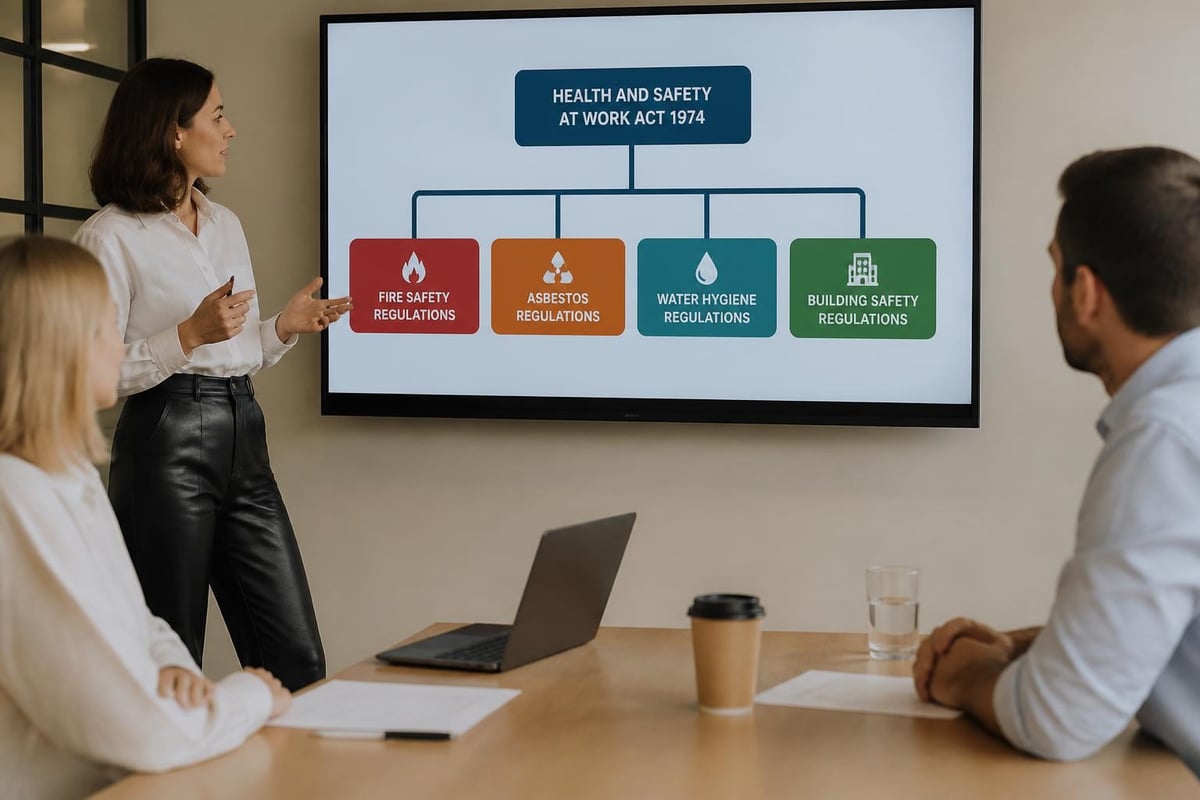
The cornerstone legislation governing workplace safety, the Health and Safety at Work etc. Act 1974, places absolute responsibility on employers and duty holders to ensure the health, safety, and welfare of anyone affected by their undertakings. This overarching duty translates into the specific requirement to conduct suitable and sufficient health and safety risk assessments under the Management of Health and Safety at Work Regulations 1999.
Key regulatory drivers include:
- The Management of Health and Safety at Work Regulations 1999, mandating written assessments for employers with five or more employees
- The Regulatory Reform (Fire Safety) Order 2005, requiring specific fire risk assessments
- The Control of Asbestos Regulations 2012, demanding asbestos-specific risk assessments
- The Building Safety Act 2022, introducing enhanced risk assessment duties for higher-risk buildings
Property managers must recognise that health and safety risk assessments extend beyond general workplace hazards. Asbestos surveys, water hygiene evaluations, fire safety appraisals, and structural integrity assessments all form part of a comprehensive risk management ecosystem that operates across multiple regulatory regimes simultaneously.
Defining Risk in the Property Context
Risk represents the likelihood that a hazard will cause harm, combined with the severity of that harm. In property management, hazards range from obvious physical dangers like defective fire doors or exposed asbestos to more subtle risks such as poor ventilation leading to condensation and mould growth.
The Health and Safety Executive provides practical guidance on identifying and managing workplace risks through a systematic approach that property professionals can adapt to their specific operational context.
The Five-Step Risk Assessment Methodology
Health and safety risk assessments follow a structured five-step process that ensures consistency, completeness, and defensibility. This methodology applies whether you're assessing a single communal area or an entire multi-building portfolio.
Step One: Identify the Hazards
Hazard identification requires methodical examination of all areas, activities, and conditions that could reasonably cause harm. For property managers, this extends beyond the obvious to include:
- Physical hazards: Defective staircases, damaged floor surfaces, inadequate lighting, electrical installations
- Fire hazards: Combustible materials, ignition sources, inadequate fire separation, blocked escape routes
- Health hazards: Asbestos-containing materials, legionella in water systems, damp and mould, poor air quality
- Structural hazards: Degraded compartmentation, compromised load-bearing elements, unsafe balconies
Effective identification draws on multiple information sources including maintenance records, previous incident reports, statutory inspection findings, occupant complaints, and direct site observation. The OSHA guidance on hazard identification emphasises the importance of involving workers and occupants who interact with the environment daily.
Step Two: Determine Who Might Be Harmed and How
This critical step requires thinking beyond building occupants to consider all potentially affected persons:
| Group | Vulnerability Factors | Example Risks |
|---|---|---|
| Residents/tenants | Prolonged exposure, may include vulnerable persons | Legionella, mould exposure, fire evacuation challenges |
| Visitors and contractors | Unfamiliarity with building, temporary access | Trip hazards, unsecured work areas, concealed asbestos |
| Maintenance staff | Regular exposure to plant rooms and service areas | Confined spaces, electrical hazards, chemical exposure |
| Emergency responders | High-stress entry under emergency conditions | Inadequate signage, locked access, structural unknowns |
Particular attention must be paid to vulnerable groups including children, elderly residents, persons with disabilities, and those with existing health conditions who may face disproportionate harm from identical hazards.
Step Three: Evaluate the Risks and Decide on Precautions
Once hazards and affected persons are identified, you must evaluate the level of risk and determine appropriate control measures. Risk evaluation typically follows a matrix approach considering both likelihood and severity.
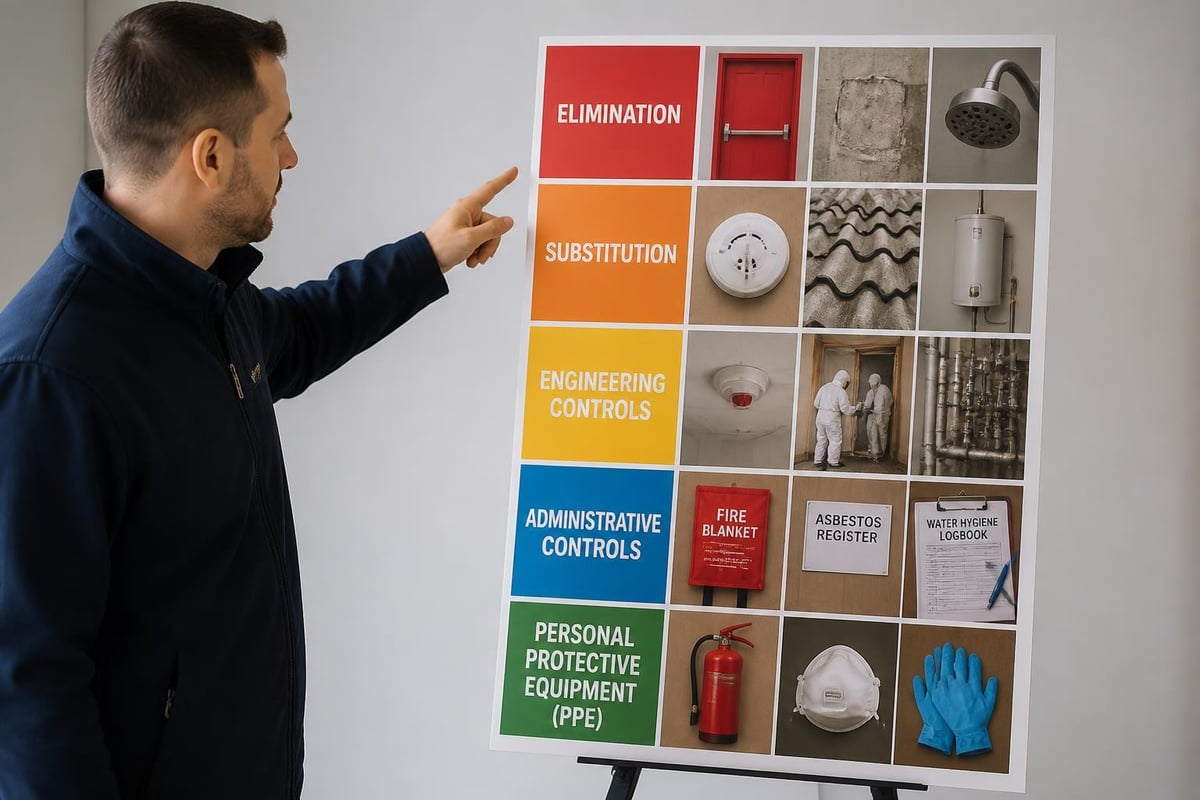
The hierarchy of controls dictates the preferred order of risk reduction:
- Elimination: Remove the hazard entirely (e.g., asbestos removal rather than encapsulation)
- Substitution: Replace with something safer (e.g., non-combustible materials)
- Engineering controls: Physical changes to reduce exposure (e.g., compartmentation upgrades, ventilation improvements)
- Administrative controls: Procedures and training (e.g., permit-to-work systems, routine inspection schedules)
- Personal protective equipment: Last resort when other controls are insufficient
For property compliance, this often means prioritising capital works over procedural controls. A defective fire door cannot be adequately managed through signage alone; it requires repair or replacement.
Step Four: Record Your Findings and Implement Them
Documentation transforms risk assessment from a thought exercise into a defensible compliance record. For organisations with five or more employees, written health and safety risk assessments are a legal requirement, but best practice dictates documentation regardless of workforce size.
Your risk assessment record should include:
- Executive summary: Overview of findings and critical actions
- Methodology statement: How the assessment was conducted and by whom
- Hazard register: Comprehensive list of identified hazards with locations
- Risk ratings: Evaluated risk levels before and after proposed controls
- Action plan: Prioritised control measures with responsibilities and timescales
- Competency evidence: Assessor qualifications and supporting documentation
The HSE provides templates and examples that property managers can adapt to their specific requirements, ensuring consistency across portfolio holdings.
Implementation requires translating assessment findings into actionable works programmes. For multi-disciplinary risks spanning fire safety, water hygiene, and structural integrity, coordination between specialist consultancies becomes essential to avoid conflicting recommendations or duplicated site visits.
Step Five: Review and Update Your Risk Assessment
Health and safety risk assessments are living documents requiring regular review and updating. Static assessments rapidly become obsolete as buildings change, occupancy patterns evolve, and new hazards emerge.
Review triggers include:
- Scheduled periodic reviews (annually at minimum for most property types)
- Significant building alterations or refurbishment
- Changes in use or occupancy
- Near-miss incidents or actual accidents
- New legislative requirements or guidance updates
- Post-incident investigations revealing assessment inadequacies
For higher-risk buildings under the Building Safety Act 2022, the duty holder must maintain an up-to-date safety case that incorporates continuous risk assessment and review cycles far more frequent than traditional annual programmes.
Sector-Specific Risk Assessment Requirements
Whilst the five-step methodology remains consistent, different property sectors face distinct hazard profiles requiring tailored assessment approaches.
Residential Property Compliance
Social housing providers and private landlords must navigate overlapping regimes including the Social Housing (Regulation) Act 2023, which elevates health and safety to a consumer standard with associated enforcement powers. Health and safety risk assessments in residential settings must specifically address:
- Fire safety in purpose-built blocks and converted properties
- Asbestos in pre-2000 housing stock
- Water hygiene in communal systems and individual dwellings
- Damp and mould following Awaab's Law requirements
- Electrical safety under the Electrical Safety Standards in the Private Rented Sector Regulations
The intersection of housing management and health and safety creates complexity. A comprehensive approach to fire risk assessments considers not just escape routes and fire-fighting equipment but also resident vulnerability, building construction, and historical modifications that may have compromised original fire strategy.

Commercial and Workplace Environments
Commercial property duty holders face different risk profiles dominated by occupational health considerations. Health and safety risk assessments must account for:
- Workplace-specific hazards: Machinery, hazardous substances, manual handling, workstation ergonomics
- Shared occupancy risks: Multiple tenants with varying activities and control levels
- Public access areas: Retail spaces, reception areas, shared amenities
- Out-of-hours vulnerabilities: Cleaning, maintenance, and security operations
The Workplace (Health, Safety and Welfare) Regulations 1992 impose specific duties regarding temperature, ventilation, lighting, and sanitary facilities that feed directly into risk assessment requirements.
Mixed-Use Developments
Mixed-use buildings present the most complex risk assessment challenges, combining residential, commercial, and sometimes industrial uses within single structures. Health and safety risk assessments must reconcile:
| Challenge | Assessment Consideration |
|---|---|
| Multiple duty holders | Clear responsibility boundaries and coordination protocols |
| Varying occupancy patterns | 24-hour residential alongside 9-5 commercial |
| Different fire strategies | Simultaneous evacuation vs. stay-put policies |
| Shared services | Single water system serving diverse users |
| Access control | Balancing security with emergency egress |
The Building Safety Act's accountability framework provides structure for higher-risk buildings, but duty holders must extend these principles across their entire portfolio regardless of height or construction.
Common Pitfalls in Risk Assessment Practice
Despite clear regulatory guidance, health and safety risk assessments frequently fail to meet suitable and sufficient standards. Understanding these common failures helps property managers avoid costly errors.
Generic Template Reliance
The most prevalent failure involves applying generic, off-the-shelf templates without meaningful site-specific adaptation. A risk assessment that simply lists standard hazards without reference to actual building conditions, historical incidents, or occupant characteristics provides no practical value and offers no legal protection.
Effective assessments demonstrate:
- Site-specific hazard identification with photographic evidence
- Reference to building-specific documentation (construction drawings, maintenance records)
- Consideration of actual occupant demographics and vulnerabilities
- Integration with other statutory assessments (fire risk assessments, asbestos management plans)
Inadequate Assessor Competency
The Health and Safety Executive emphasises that risk assessors must possess adequate knowledge, experience, and training. For complex property risks, this often requires specialist technical competency beyond general health and safety qualifications.
Asbestos risk assessment requires P402-qualified surveyors. Water hygiene risk assessment demands understanding of BS 8580 and ACoP L8. Fire risk assessment benefits from Fire Risk Assessor competency schemes aligned to third-party certification.
Multi-disciplinary property compliance demands either a lead assessor with breadth across multiple regimes or coordinated specialist input. The comprehensive services approach ensures technical competency matches risk complexity.
Failure to Prioritise and Cost Actions
Risk assessments that identify hazards without prioritising remedial actions or providing cost guidance leave duty holders unable to make informed decisions. Effective assessments use risk matrices to categorise findings as:
- Critical/immediate: Risks requiring emergency action, typically completed within 24 hours
- High priority: Significant risks requiring action within defined short timescales (days to weeks)
- Medium priority: Moderate risks addressed within planned maintenance cycles (months)
- Low priority: Minor risks monitored and addressed opportunistically
Costed action plans transform assessments into procurement-ready works specifications, enabling duty holders to budget appropriately and demonstrate regulatory engagement.
Inadequate Review Cycles
Static risk assessments represent compliance failures waiting to happen. Buildings evolve through alterations, occupancy changes, component degradation, and maintenance interventions. Health and safety risk assessments must evolve correspondingly.
Leading property managers implement tiered review protocols:
| Review Type | Frequency | Trigger | Scope |
|---|---|---|---|
| Routine monitoring | Monthly | Scheduled | Visual condition checks of high-risk areas |
| Targeted re-assessment | Quarterly | Post-works or incident | Specific affected systems or areas |
| Partial review | Annually | Calendar | Full re-assessment of critical risks |
| Comprehensive review | 3-5 years | Major change or full audit cycle | Complete re-assessment as if initial |
Integrating Risk Assessment into Operational Practice
Health and safety risk assessments deliver value only when integrated into day-to-day property management operations. This requires embedding assessment findings into:
Planned preventative maintenance schedules: Risk-based inspection frequencies for critical systems including fire safety equipment, water hygiene controls, and structural elements.
Contractor management protocols: Pre-works briefings informed by risk assessment findings, permit-to-work systems for high-risk activities, and competency verification requirements.
Emergency response procedures: Building-specific emergency plans reflecting actual identified risks, evacuation strategies aligned to fire risk assessment recommendations, and incident response flowcharts.
Occupant communication: Proportionate safety information provision, clear guidance on limitations and restrictions (e.g., asbestos locations), and channels for reporting emerging hazards.
The case studies from leading property managers demonstrate how systematic risk assessment drives measurable improvements in safety outcomes whilst reducing long-term compliance costs through early intervention.
Documentation and Audit Readiness
Regulatory inspections, due diligence exercises, insurance audits, and legal proceedings all demand production of comprehensive, defensible health and safety risk assessments. Audit-ready documentation requires:
- Version control: Clear identification of current assessment versions with superseded versions archived but accessible
- Evidence trails: Photographic records, inspection reports, and specialist testing results supporting assessment conclusions
- Competency records: Assessor qualifications, professional indemnity insurance, and accreditation documentation
- Action tracking: Demonstrable progress against recommended controls with evidence of completion
- Review logs: Dated records of periodic reviews, trigger event assessments, and ongoing monitoring
Digital compliance platforms increasingly enable centralised risk assessment management across multi-site portfolios, providing dashboard visibility of outstanding actions, approaching review dates, and cross-regime dependencies.
The quality management systems employed by accredited consultancies ensure assessment outputs meet ISO 9001 documentation standards, providing additional assurance during external scrutiny.
The Role of Specialist Consultancies
Complex property portfolios spanning multiple risk domains benefit from specialist consultancy support that brings technical depth, regulatory currency, and operational efficiency. When selecting risk assessment partners, consider:
- Multi-discipline capability: Single-source coordination across asbestos, fire, water, and building safety avoiding fragmented instructions
- Accreditation portfolio: UKAS, RICS, IFE, BOHS, and Legionella Control Association recognition demonstrating technical competency
- Audit-ready outputs: Assessment reports structured for regulatory compliance with fully costed priority action plans
- Nationwide coverage: Consistent service delivery across geographically dispersed portfolios
- Integration capability: Compatibility with existing asset management systems and compliance tracking platforms
Effective health and safety risk assessments protect people, property, and organisations through systematic identification and control of hazards across every aspect of building operation. For property managers navigating increasingly complex regulatory landscapes, robust assessment processes supported by specialist expertise ensure legal compliance whilst demonstrating genuine commitment to occupant safety. oxford-ec.co.uk delivers comprehensive, audit-ready risk management across asbestos, fire safety, water hygiene, damp and mould, and building safety with nationwide coverage and multi-disciplinary precision that transforms regulatory obligations into operational excellence.