Commercial property owners and managers face an increasingly complex regulatory landscape in 2026. From fire safety legislation to environmental health requirements, commercial property compliance demands systematic oversight across multiple disciplines. The financial and reputational consequences of non-compliance have never been more severe, with enforcement authorities taking a harder line on breaches that compromise occupant safety or environmental standards. Understanding the full scope of your statutory obligations is the foundation of effective risk management.
The Statutory Framework for Commercial Property Compliance
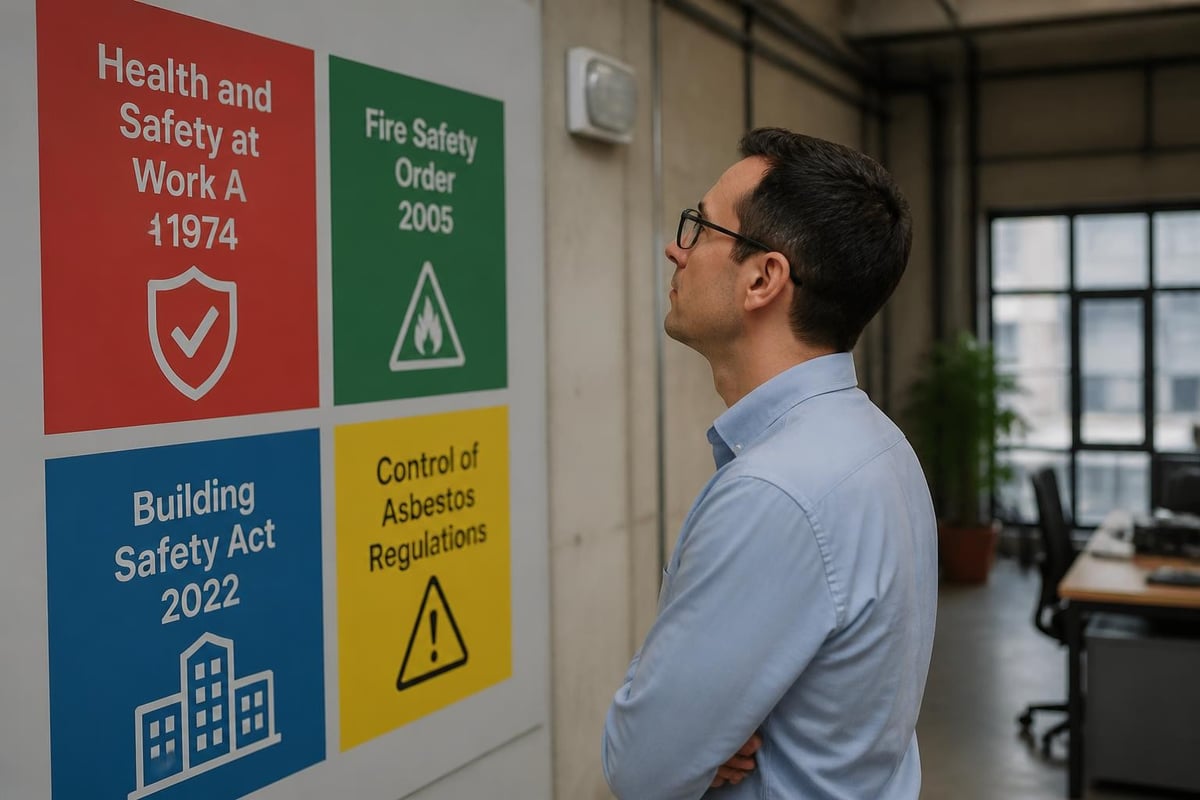
The regulatory framework governing commercial buildings draws from numerous legislative sources, each imposing specific duties on property owners, employers, and managing agents. The Health and Safety at Work etc. Act 1974 establishes the overarching duty of care, requiring duty holders to ensure the safety of employees and visitors. This umbrella legislation underpins more specific regulations covering fire, asbestos, water safety, and structural integrity.
The Regulatory Reform (Fire Safety) Order 2005 remains the cornerstone of fire safety compliance for non-domestic premises. It requires a responsible person to conduct suitable and sufficient fire risk assessments and implement appropriate control measures. The Fire Safety Act 2021 extended these duties to include building external walls and individual flat entrance doors in multi-occupied residential buildings with commercial elements.
Key legislative instruments include:
- Control of Asbestos Regulations 2012 (CAR 2012)
- Health and Safety at Work etc. Act 1974
- Regulatory Reform (Fire Safety) Order 2005
- Building Safety Act 2022
- Workplace (Health, Safety and Welfare) Regulations 1992
- Control of Substances Hazardous to Health Regulations 2002 (COSHH)
The Building Safety Act 2022 introduced the most significant changes to building regulation in a generation. For commercial properties, particularly those with mixed-use elements or higher-risk characteristics, the Act imposes enhanced duties around structural integrity, fire safety systems, and resident engagement. Understanding how these regulations interact is essential for comprehensive commercial property compliance.
Multi-Discipline Risk Management Approach
Effective commercial property compliance requires integration across traditionally siloed disciplines. A fragmented approach-where asbestos, fire, water, and building safety are managed independently-creates gaps in oversight, duplicates effort, and increases the risk of regulatory breaches going undetected.
Fire Safety Compliance
Fire safety obligations extend far beyond the initial Fire Risk Assessment. Commercial properties must maintain active and passive fire protection systems, ensure adequate means of escape, and implement robust management systems. The responsible person must review fire risk assessments regularly, typically annually or following significant changes to the building or its use.
Compartmentation Survey and Passive Fire Protection audits are critical for verifying structural fire resistance. These surveys examine compartment floors, walls, service penetrations and cavity barriers to ensure fire and smoke cannot spread beyond designed boundaries. Failures in fire-stopping-often hidden within ceiling voids or service risers-represent one of the most common compliance deficiencies identified during enforcement inspections.

Fire door integrity forms another essential component. Doors must close correctly into their frames, possess intact intumescent strips and smoke seals, and show no signs of damage or unauthorised modification. A comprehensive inspection framework should verify both the physical condition and operational functionality of every fire door on the escape route.
| Fire Safety Component | Inspection Frequency | Regulatory Basis |
|---|---|---|
| Fire Risk Assessment | Annual / post-change | RR(FS)O 2005 |
| Emergency Lighting | Annual duration test | BS 5266 |
| Fire Alarm Systems | Quarterly / Annual | BS 5839 |
| Fire Doors | Annual minimum | RR(FS)O 2005 |
| Compartmentation | Post-works / biennial | Building Regulations |
Asbestos Management
Despite being banned in 1999, asbestos remains present in countless commercial buildings constructed or refurbished before the millennium. The Control of Asbestos Regulations 2012 place a clear duty on those who manage non-domestic premises to identify asbestos-containing materials (ACMs), assess their condition, and implement a management plan.
An asbestos management survey locates and assesses ACMs during normal occupation, creating a photographic register with material risk scoring. This differs fundamentally from refurbishment and demolition surveys, which are fully intrusive and designed to identify every material before invasive works commence. Annual re-inspections monitor the condition of known ACMs, updating risk scores and triggering remedial action when materials deteriorate.
Commercial property compliance in the asbestos domain requires more than simply holding a survey report. Duty holders must ensure the asbestos register is available to maintenance contractors, communicate risks effectively, and maintain strict permit-to-work systems for any activities that could disturb ACMs.
Water Hygiene and Legionella Control
Legionella bacteria pose a serious risk in commercial buildings with complex water systems, cooling towers, or infrequently used outlets. The Health and Safety Executive's Approved Code of Practice L8 sets out the legal requirements for preventing or controlling the risk of exposure to Legionella bacteria.
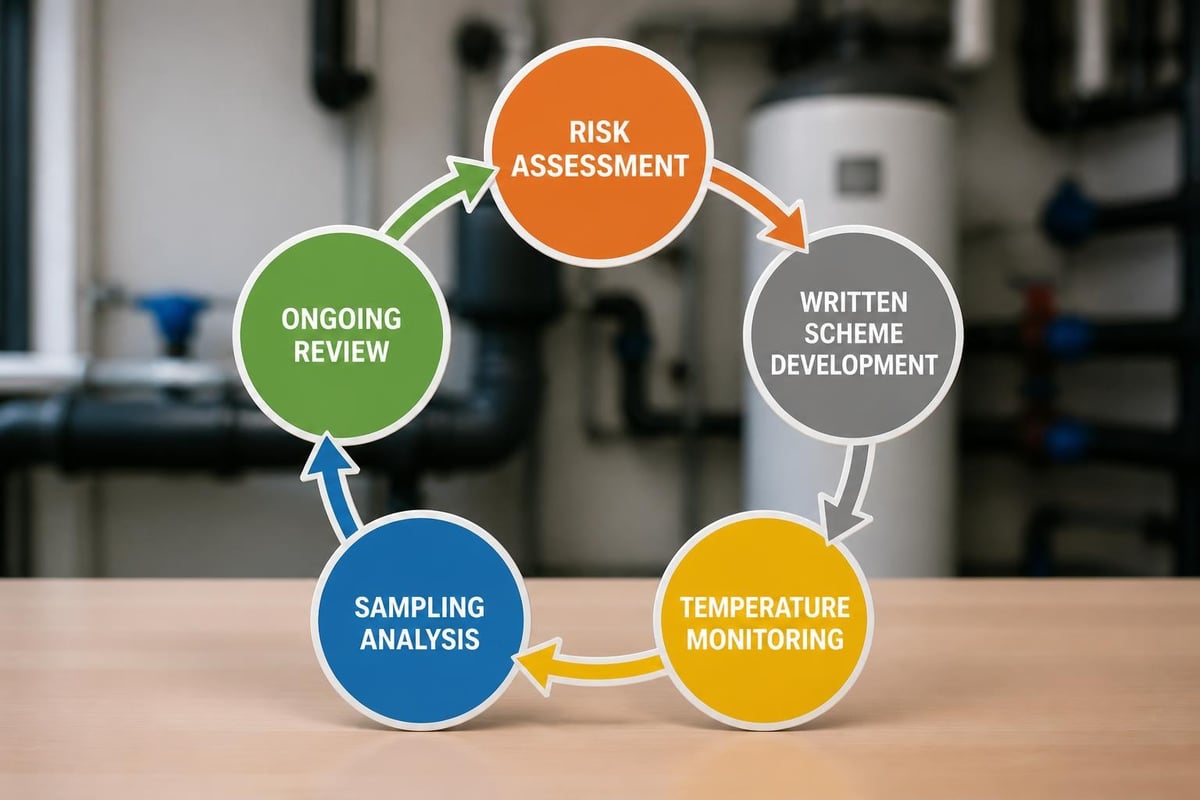
Compliance begins with a comprehensive Legionella Risk Assessment aligned to BS 8580-1. This assessment identifies potential sources of risk, evaluates control measures, and establishes a written scheme of control. Regular temperature monitoring, descaling, disinfection, and microbiological sampling form the ongoing operational requirements.
Essential water hygiene activities include:
- Quarterly temperature monitoring at sentinel outlets
- Monthly flushing of infrequently used outlets
- Annual calorifier inspection and descaling
- Biannual microbiological sampling and UKAS laboratory analysis
- Immediate investigation of positive Legionella results
The water hygiene service portfolio should encompass both assessment and ongoing monitoring, ensuring that control measures remain effective and that sampling regimes align with system complexity and risk profile.
Emerging Compliance Priorities in 2026
Commercial property compliance continues to evolve as new regulations are introduced and enforcement priorities shift. Three areas have gained particular prominence in 2026: damp and mould management, building safety transparency, and energy performance requirements.
Damp and Mould Assessment
While historically associated with residential properties, damp and mould now represent material compliance risks for commercial duty holders. The Health and Safety at Work etc. Act 1974 and Workplace (Health, Safety and Welfare) Regulations 1992 require employers to provide safe, ventilated, and healthy workplace conditions. Visible mould growth, condensation issues, or water ingress can constitute breaches of these duties.
A professional mould and damp assessment identifies moisture sources, evaluates ventilation adequacy, and delivers costed remediation recommendations. The diagnostic process extends beyond surface observation to include moisture meter readings, thermal imaging, and air quality sampling where appropriate. For commercial buildings with vulnerable occupants-such as healthcare facilities or educational establishments-the duty of care is heightened further.
Building Safety and Transparency
The Building Safety Regulator's operational launch has fundamentally altered compliance expectations for higher-risk buildings. Even commercial properties below the high-rise threshold face enhanced scrutiny regarding structural safety, fire compartmentation, and resident communication.
Property managers must maintain golden thread documentation-a digital record of design, construction, and modification information that remains accessible throughout the building's lifecycle. This requirement extends to safety case reports for occupied high-risk buildings, demonstrating that the building is safe for continued occupation and that all safety risks are being managed effectively.
Documentation and Audit Trails
Robust record-keeping has transitioned from best practice to regulatory necessity. Enforcement authorities expect duty holders to produce comprehensive evidence of compliance activities, from risk assessments to remedial works completion certificates. Missing documentation or incomplete audit trails can result in enforcement notices even when underlying compliance standards are met.
A centralised compliance management system should maintain:
- Current and historical risk assessments across all disciplines
- Maintenance logs and testing records with engineer signatures
- Remedial works specifications and photographic evidence
- Training records demonstrating competency of responsible persons
- Contractor accreditations and insurance documentation
The effective property compliance framework emphasises automated tracking, proactive monitoring of regulatory changes, and centralised data accessibility to support rapid audit response.
Inspection Regimes and Competency Requirements
Commercial property compliance demands technically competent inspectors who understand both regulatory requirements and building pathology. Generic property inspections rarely satisfy statutory duties, which typically prescribe specific methodologies, reporting formats, and competency standards.
| Discipline | Competency Standard | Typical Qualification |
|---|---|---|
| Fire Risk Assessment | PAS 79-1 / PAS 79-2 | NEBOSH Fire Certificate / IFE Level 4 |
| Asbestos Surveying | HSG 264 | BOHS P402 / P403 |
| Legionella Risk Assessment | HSG 274 / L8 | Legionella Control Association training |
| Fire Door Inspection | BWF-CERTIFIRE | BM TRADA / FIRAS training |
| Compartmentation Survey | PAS 9980 | Fire stopping manufacturer training |
The International Standards of Practice for Inspecting Commercial Properties provides a framework for comprehensive property evaluation, though statutory compliance inspections must align with discipline-specific guidance documents and codes of practice.
Competency verification should extend beyond the individual surveyor to the employing organisation. Look for UKAS accreditation for laboratory analysis, third-party certification schemes for specialist works, and professional indemnity insurance adequate to the scale and complexity of the portfolio.
Managing Compliance Across Multi-Site Portfolios
Portfolio landlords and corporate occupiers face the additional challenge of ensuring consistent compliance standards across geographically dispersed estates. Variations in local authority interpretation, differing building ages and construction types, and decentralised management structures all contribute to compliance fragmentation.
A unified approach begins with standardised assessment methodologies and reporting templates that enable portfolio-wide risk comparison. Centralised compliance registers should track assessment due dates, remedial works progress, and outstanding actions across all sites. This visibility allows senior management to identify systemic issues, allocate remedial budgets effectively, and demonstrate governance to stakeholders.
Portfolio management best practices include:
- Annual compliance audits reviewing documentation completeness
- Standardised responsible person appointment letters and training
- Centralised contractor frameworks with consistent competency standards
- Regular portfolio-wide risk reporting to board level
- Planned preventative maintenance schedules aligned to regulatory cycles
Technology platforms now enable real-time compliance dashboards, automated deadline alerts, and digital evidence libraries accessible during enforcement visits. However, technology only delivers value when underpinned by robust processes and competent personnel who understand their regulatory obligations.
Understanding commercial property management regulations provides essential context for portfolio-level governance structures and reporting hierarchies.
Enforcement Trends and Financial Consequences
Enforcement authorities have signalled a clear intention to pursue robust action against duty holders who fail to meet statutory compliance standards. Fire and rescue authorities routinely issue enforcement notices requiring immediate remedial works, while the Health and Safety Executive prosecutes serious breaches with substantial financial penalties.
Recent prosecutions demonstrate that corporate duty holders cannot rely on delegation to managing agents as a defence. Directors and senior managers have been held personally liable where organisational failures to comply stem from inadequate governance, insufficient resource allocation, or failure to verify that compliance obligations are being met.
Financial consequences extend beyond direct penalties to encompass increased insurance premiums, reduced asset values, and reputational damage that affects tenant retention and acquisition. For listed companies and institutional investors, compliance failures can trigger environmental, social and governance (ESG) concerns that affect investment ratings and shareholder confidence.
The shift toward outcomes-based regulation-where enforcement focuses on actual safety standards rather than procedural compliance-demands higher-quality risk assessments and more rigorous implementation of control measures. Tick-box compliance approaches that satisfy minimum documentation requirements whilst leaving underlying risks unaddressed are increasingly ineffective.
Integration with Commercial Lease Obligations
Commercial property compliance intersects with contractual lease terms, creating potential tension between landlord and tenant obligations. Full repairing and insuring (FRI) leases typically place maintenance responsibilities on tenants, yet statutory compliance duties often remain with the landlord as the party in control of relevant building elements.
Clarity around compliance responsibility requires careful lease drafting and explicit service charge provisions. Common area maintenance (CAM) charges should itemise compliance activities separately, ensuring transparency and reducing disputes. Some jurisdictions now mandate specific CAM disclosure requirements, though UK practice relies primarily on contractual clarity.
Lease events such as assignment, surrender, or lease expiry trigger heightened compliance obligations. Landlords should conduct comprehensive compliance audits before accepting lease assignments or at lease end, documenting any breaches to support dilapidations claims or remedial cost recovery.
For properties with mixed commercial and residential use, the interface between the Landlord and Tenant Act 1954, Housing Act 2004, and Building Safety Act 2022 creates particular complexity. Block management responsibilities require careful navigation to ensure that statutory duties are allocated appropriately between freeholder, managing agent, and individual leaseholders.
Building a Proactive Compliance Culture
Reactive compliance-responding to enforcement notices or addressing deficiencies only when identified during external audit-represents a high-risk strategy with limited return. Proactive commercial property compliance embeds risk management into operational routines, normalises continuous improvement, and positions regulatory obligations as integral business functions rather than administrative burdens.
Leadership commitment is foundational. Senior management must allocate sufficient budget, ensure competent persons are appointed to discharge statutory duties, and create reporting structures that escalate compliance risks appropriately. Regular board-level reporting on compliance status, remedial works progress, and emerging regulatory changes demonstrates governance maturity.
Training extends beyond the nominated responsible persons to encompass reception staff who manage visitor safety, maintenance teams who may encounter ACMs or disturb fire protection, and facilities managers who commission contractors. A comprehensive compliance culture ensures that every team member understands their role in maintaining safe buildings.
Continuous improvement mechanisms include lessons-learned reviews following incidents or near-misses, post-remediation effectiveness checks, and periodic gap analyses against evolving regulatory expectations. Consolidating compliance under specialist consultancies enables access to cross-discipline expertise whilst maintaining accountability through single-point project management.
Effective commercial property compliance in 2026 demands integrated risk management across multiple technical disciplines, supported by robust documentation, competent personnel, and proactive governance. Whether you manage a single commercial building or a national portfolio, the complexity of overlapping regulations requires specialist expertise delivered with precision and accountability. Oxford-ec.co.uk provides one-stop, multi-discipline risk management across asbestos, fire safety, water hygiene, damp and mould, and building safety-delivered with audit-ready precision, nationwide. Contact us to discuss how we can support your compliance obligations.