

Asbestos remains one of the most significant health hazards in UK property management, despite its ban in 1999. Every year, around 5,000 deaths in Britain are linked to past asbestos exposure, making it the single greatest cause of work-related fatalities. For duty holders managing commercial premises, residential blocks, or mixed-use estates, understanding the legal requirement for asbestos surveys is not optional-it is a statutory obligation under the Control of Asbestos Regulations 2012. The consequences of non-compliance extend far beyond financial penalties; they include criminal prosecution, director disqualification, and irreversible harm to occupants and maintenance teams. This guide explains the purpose, scope, and practical execution of asbestos surveys across different property contexts.
Understanding the Legal Duty to Manage Asbestos
The Control of Asbestos Regulations 2012 (CAR 2012) places a legal "duty to manage" asbestos on anyone who has maintenance or repair responsibilities for non-domestic premises. This duty applies equally to landlords, managing agents, facilities managers, and building owners. The responsibility is absolute: you must presume asbestos is present in any building constructed or refurbished before the year 2000, unless you have strong evidence to the contrary.
Key obligations under CAR 2012 include:
- Identifying the location and condition of asbestos-containing materials (ACMs)
- Assessing the risk of exposure from those materials
- Preparing and maintaining an asbestos management plan
- Implementing controls to prevent or minimise exposure
- Reviewing and updating the plan at regular intervals
The Health and Safety Executive emphasises that arranging an asbestos survey is the foundational step in discharging this duty. Without a compliant survey, duty holders operate in a legal and operational vacuum, unable to demonstrate control or protect those who work in or occupy their buildings.

Types of Asbestos Surveys Defined by HSG 264
HSG 264, the authoritative guidance document published by the Health and Safety Executive, defines two principal categories of asbestos surveys. Each serves a distinct purpose and employs different methodologies. Confusing the two-or commissioning the wrong type-can expose duty holders to prosecution and place building users at risk.
Management Surveys
A management survey is designed to locate, as far as reasonably practicable, the presence and extent of any asbestos-containing materials in a building that could be damaged or disturbed during normal occupancy, maintenance, or foreseeable repairs. It is the standard survey for buildings in normal occupation.
Management surveys are non-intrusive by nature. Surveyors will visually inspect all accessible areas, but they will not cause significant damage to the building fabric. Some minor intrusion-lifting ceiling tiles, removing small sections of boxing, accessing loft spaces-is permitted and expected. However, structural dismantling or destructive opening-up is not part of this scope.
| Management Survey Characteristics | Detail |
|---|---|
| Purpose | Ongoing asbestos management during normal use |
| Intrusiveness | Minimally intrusive, non-destructive |
| Sampling | Representative sampling of suspect materials |
| Access | All reasonably accessible areas |
| Presumption | Inaccessible materials presumed to contain asbestos unless shown otherwise |
The output of a management survey is a register of ACMs (or presumed ACMs), each scored for material risk and priority risk according to HSG 264 algorithms. This register forms the backbone of your asbestos management plan and must be reviewed annually at a minimum.
Refurbishment and Demolition Surveys
Refurbishment and demolition (R&D) surveys are required before any intrusive refurbishment work or prior to full or partial demolition. Unlike management surveys, R&D surveys are fully intrusive. The surveyor's objective is to locate and identify all ACMs in the area where work will take place, which means destructive inspection is not only permitted but required.
This type of survey cannot be conducted while the building is occupied. Areas must be vacated, and the surveyor will open up wall cavities, remove ceiling panels, lift floor coverings, and dismantle fixed installations to access concealed materials. Every material suspected of containing asbestos must be sampled and analysed unless it can be confidently identified as asbestos-free.
R&D surveys are essential when:
- Planning major refurbishment, extension, or fit-out works
- Demolishing all or part of a structure
- Replacing building services (heating, ventilation, electrical risers)
- Opening up floor or ceiling voids for service installation
The distinction matters. Oxford EC's asbestos surveying services align precisely with HSG 264 scope definitions, ensuring that management surveys remain proportionate and R&D surveys achieve total material disclosure before works commence.

What Happens During an Asbestos Survey
Understanding the practical steps involved in asbestos surveys helps duty holders set realistic expectations, brief building occupants, and prepare sites for surveyor access. Although specific protocols vary depending on survey type, certain procedural elements are universal.
Pre-Survey Planning and Documentation Review
Before any site visit, the surveyor will request existing property information: previous asbestos surveys, building plans, refurbishment records, and any known ACM locations. This desktop review informs the survey strategy and identifies high-risk areas requiring particular attention.
Duty holders should also provide:
- Details of building construction date and any extensions
- Occupancy patterns and access restrictions
- Planned works or areas of concern
- Health and safety site rules and induction requirements
On-Site Inspection and Sampling
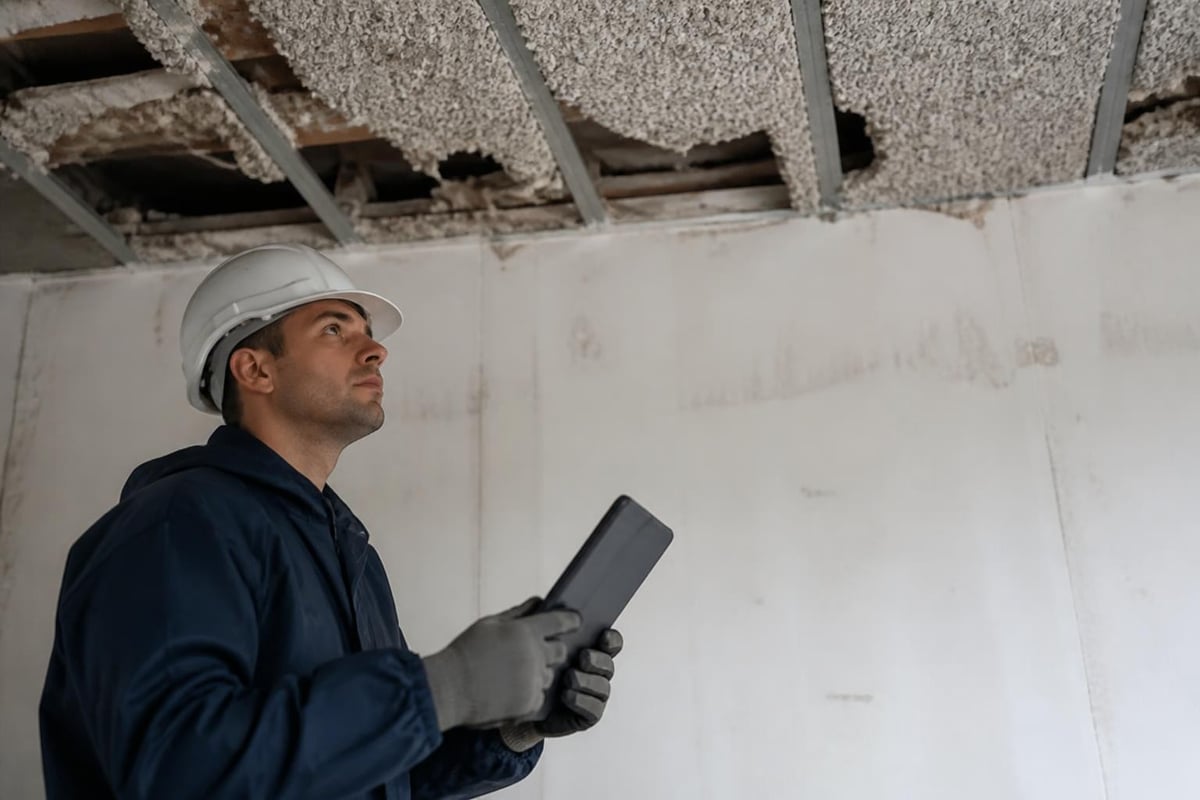
During the site visit, the surveyor systematically inspects all areas within scope. For management surveys, this includes every room, circulation space, service riser, plant room, loft void, basement, and external area where building materials are present. The surveyor identifies suspect materials-those that, based on visual appearance, age, and context, may contain asbestos.
Representative samples are taken using strict protocols to minimise fibre release. Each sample is double-bagged, labelled with a unique identifier, and sent to a UKAS-accredited laboratory for polarised light microscopy (PLM) analysis. The laboratory determines whether asbestos is present and, if so, identifies the type (chrysotile, amosite, crocidolite, or others) and approximate percentage.
Not every suspect material is sampled. Where strong presumption exists, the surveyor may record the material as "presumed asbestos" to avoid unnecessary sampling costs and fibre release. This is compliant and often more conservative than destructive sampling.
Risk Assessment and Material Scoring
Once asbestos presence is confirmed or presumed, each ACM is scored using the HSG 264 material assessment algorithm and priority assessment algorithm. These algorithms consider:
- Material type (asbestos content, friability, surface treatment)
- Extent of damage (good condition, low damage, medium damage, high damage)
- Surface treatment (encapsulated, unsealed, degraded)
- Asbestos type (chrysotile is lower risk than amosite or crocidolite)
The material assessment score determines the inherent risk posed by the ACM itself. The priority assessment score factors in human activity, accessibility, likelihood of disturbance, and occupancy levels. Together, these scores guide management actions: some materials require immediate encapsulation or removal, others can be left in situ and monitored, and some pose negligible risk in their current state.
Asbestos Management Plans and Ongoing Compliance
Commissioning an asbestos survey is only the beginning. The survey report must be translated into a living asbestos management plan that governs day-to-day building operation, contractor briefings, and periodic condition monitoring.
Core Components of an Asbestos Management Plan
An effective management plan includes the following elements:
- ACM register with locations, photographs, sample references, and risk scores
- Site plans showing ACM locations marked clearly
- Management actions for each ACM (monitor, encapsulate, label, remove)
- Procedures for emergency ACM disturbance and unplanned exposure
- Re-inspection schedule (annually as a minimum, more frequently for high-risk materials)
- Contractor briefing protocols and permit-to-work systems
- Training records for staff who may encounter ACMs
The plan must be readily accessible to maintenance teams, contractors, and emergency services. In practice, this means both physical copies on-site and digital versions integrated into building management systems.
Annual Re-Inspections and Plan Reviews
Asbestos-containing materials degrade over time. Physical damage from building movement, water ingress, or accidental contact can transform a low-risk ACM into a high-priority hazard. Annual re-inspections ensure that material condition scores remain current and that management actions are revised accordingly.
| Re-Inspection Frequency | Scenario |
|---|---|
| Every 6 months | High-risk ACMs in areas of heavy traffic or frequent maintenance |
| Annually | Standard-risk ACMs in normal occupancy areas |
| Every 2 years | Low-risk ACMs in rarely accessed plant rooms or enclosed voids |
| After any incident | Water damage, fire, structural movement, or accidental disturbance |
During re-inspection, the surveyor photographs each ACM, updates material condition scores, and flags any new damage or change in accessibility. The asbestos register and management plan are revised to reflect current conditions, ensuring that duty holders maintain accurate, audit-ready documentation.
Common Pitfalls in Asbestos Survey Procurement
Many duty holders encounter avoidable compliance failures not through negligence, but through misunderstanding survey scope, procurement processes, or report quality. Recognising these pitfalls in advance ensures better outcomes.
Selecting the Wrong Survey Type
One of the most frequent errors is commissioning a management survey when a refurbishment and demolition survey is legally required, or vice versa. A management survey will not provide the total material disclosure needed before demolition. Conversely, a fully intrusive R&D survey is wasteful and disruptive if the building will remain in normal occupation.
Always specify the survey purpose clearly: routine compliance management, planned refurbishment, change of use, or demolition. Competent surveyors will recommend the appropriate scope.
Failing to Update Surveys After Building Alterations
Asbestos surveys are time-limited documents. If the building is extended, refurbished, or significantly altered after the original survey, those new or modified areas fall outside the survey scope. Duty holders must commission supplementary surveys covering the altered zones and integrate findings into the existing management plan.
Regulatory inspections frequently identify this gap. A building with a 2015 management survey and a 2021 loft conversion will fail compliance unless the loft area was surveyed post-works.
Inadequate Surveyor Competence
Not all asbestos surveyors are equal. Competence is defined by a combination of formal qualifications (BOHS P402 for management surveys, P403 for R&D surveys), professional experience, and adherence to HSG 264 methodology. Duty holders should verify:
- BOHS P402 or P403 certification (as appropriate)
- UKAS ISO 17020 accreditation of the surveying organisation
- Professional indemnity insurance covering asbestos-related claims
- Experience in similar building types (residential, commercial, industrial, listed)
Accreditations matter because they provide third-party verification of competence and procedural compliance, reducing the risk of deficient surveys and regulatory challenge.
Sector-Specific Considerations for Asbestos Surveys
Different property sectors present unique challenges for asbestos surveying. Understanding these nuances ensures that survey scope, access arrangements, and reporting outputs align with operational realities.
Residential Blocks and Social Housing
Multi-occupancy residential buildings-particularly those constructed between 1950 and 1985-often contain extensive asbestos in communal areas, service risers, bin stores, lift shafts, and within individual flats. Gaining access to private dwellings for survey purposes requires careful tenant liaison, advance notice, and sensitivity to vulnerable occupants.
Surveyors must balance thoroughness with minimal disruption. In large blocks, phased surveys may be necessary, with communal areas surveyed first and individual flats scheduled over multiple visits. Case studies from large-scale re-inspection projects demonstrate how experienced consultancies manage these logistical complexities while maintaining HSG 264 compliance.
Schools and Educational Estates
Schools present heightened risk because of the vulnerability of child occupants and the intensity of building use. Many educational buildings from the 1960s and 1970s contain asbestos ceiling tiles, textured coatings, pipe insulation, and boiler lagging. The Department for Education mandates that all schools must have an up-to-date asbestos management plan, and Ofsted inspections now routinely examine asbestos compliance.
Survey access must be timed around term schedules, and certain areas (science labs, technology workshops, drama studios) require particular attention due to higher disturbance risk during practical lessons.
Commercial and Industrial Premises
Warehouses, factories, and commercial offices often contain asbestos in roofing sheets, wall cladding, insulation boards, and sprayed coatings. Industrial sites may also have asbestos insulation on pipework, boilers, and process equipment. These environments require surveyors with industrial experience who understand process plant, high-level access, and the interaction between ACMs and operational machinery.
For sites undergoing change of use-such as industrial-to-residential conversions-refurbishment and demolition surveys are mandatory before any works commence, and scope must cover all structural elements, services, and external cladding.
Integrating Asbestos Surveys into Broader Compliance Frameworks
Asbestos management does not exist in isolation. Effective duty holders integrate asbestos compliance with fire safety, water hygiene, and building safety obligations, creating unified risk management systems that reduce duplication, improve audit readiness, and streamline contractor coordination.
Cross-Referencing Asbestos and Fire Safety Documentation
Fire risk assessments and asbestos management plans must reference each other. For example, fire doors, fire-stopping materials, and ceiling voids accessed during fire compartmentation surveys may contain ACMs. Contractors conducting fire safety remedial works must be briefed on ACM locations to prevent inadvertent disturbance.
Similarly, asbestos surveyors should be aware of fire safety measures-such as sprinkler systems, fire alarm cabling, and emergency lighting routes-to avoid recommending ACM removal that would compromise fire protection.
Unified Contractor Briefing and Permit-to-Work Systems
Every contractor entering a building with known or presumed ACMs must receive a site-specific asbestos briefing before commencing work. This briefing must reference the asbestos register, highlight ACMs in or near the work area, and confirm control measures (such as non-licensed works procedures or licensed asbestos removal).
Permit-to-work systems should integrate asbestos, fire, electrical, and confined space risks into a single approval process, ensuring that no work proceeds without multi-disciplinary hazard assessment. Consolidating compliance under one consultancy eliminates the risk of conflicting advice and ensures consistent, audit-ready documentation.
Technological Advances in Asbestos Surveying
Traditional asbestos surveys rely on visual inspection, hand-drawn sketches, and manual transcription of sample data. Modern surveying increasingly incorporates digital tools that improve accuracy, traceability, and client usability.
Digital surveying platforms now enable:
- Tablet-based data capture with real-time geolocation tagging
- Integrated photography with automatic image linking to ACM records
- Cloud-based report generation with interactive floor plans
- Client portals for live access to asbestos registers and re-inspection schedules
- QR code labelling for on-site ACM identification via smartphone
These technologies do not replace surveyor competence-visual identification and professional judgement remain paramount-but they enhance consistency, reduce transcription errors, and provide clients with more usable, accessible documentation.
Regulatory Developments and Future Trends
Asbestos regulation in the UK is mature, but enforcement intensity continues to increase. The Health and Safety Executive's "Asbestos: Hidden Killer" campaign has raised awareness among smaller duty holders, and prosecutions for asbestos management failures remain a priority.
Looking ahead, several trends are shaping the asbestos surveying landscape:
- Increased scrutiny of residential asbestos management, particularly in the social housing sector, following high-profile enforcement cases
- Greater integration of asbestos obligations into Building Safety Act compliance, with principal accountable persons required to demonstrate systematic asbestos control
- Enhanced expectations for digital accessibility of asbestos data, with fire and rescue services requesting cloud-based ACM registers for emergency planning
- Rising demand for competent, accredited surveyors, creating upward pressure on fees and lead times
Duty holders who maintain proactive, audit-ready asbestos compliance-through regular re-inspection, competent surveying, and integrated risk management-position themselves ahead of regulatory tightening and avoid the reputational and financial costs of reactive enforcement.
Asbestos surveys are not administrative exercises-they are life-saving tools that protect building users, maintenance staff, and contractors from preventable exposure to lethal fibres. Whether you manage a single commercial property or a nationwide portfolio, HSG 264-compliant surveying, robust management planning, and annual re-inspection form the irreducible foundation of legal and ethical duty holder performance. Oxford EC delivers audit-ready asbestos compliance as part of a unified, multi-discipline risk management service, ensuring that your asbestos obligations integrate seamlessly with fire safety, water hygiene, and building safety across your entire estate.